St Kilda
8 May 2023 · Outer Hebrides, Scotland, Scottish Island Bagging
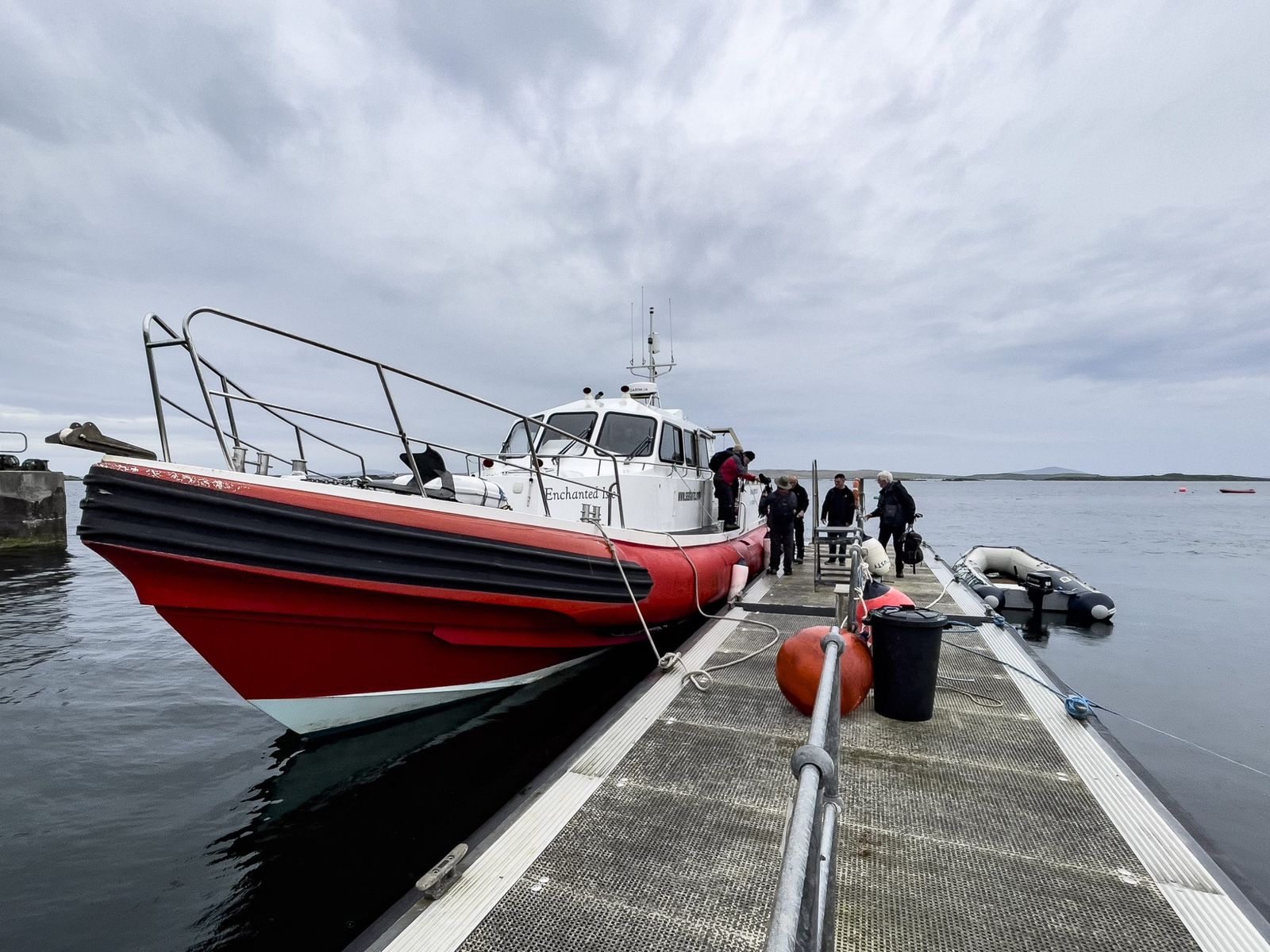
I was lucky that the weather and sea conditions changed to allow me to make the trip (with 11 others) out to St Kilda - a magical destination some 50 miles west of Harris.
I’ve been keen to visit St Kilda since reading a novel (name long forgotten) set there. It is one of the few places in the world to hold dual UNESCO World Heritage status - for both natural and cultural criteria.
The isolated island group is all that remains above the sea of a large volcano thought to have been active about 60 million years ago. The underlying rocks have been eroded by ice, rain and sea to form an impressive coastline of four main islands and offshore stars. Hirta boasts the highest sea cliff in the British Isles (376m) while Star an Admin is the highest sea stac.
For thousands of years people lived on Hirta, the largest island in the archipelago, harvesting the seabirds, fishing and growing crops. In 1930 the last remaining 36 islanders left, bringing to an end a unique culture and way of life.
Visiting St Kilda is not straightforward. There are a small number companies promoting trips and it is necessary to book well n advance. That thought is just the start of the logistics though. Sea and weather conditions for the 2.5 - 3 hour trip need to be right and, most importantly, it must be possible to transfer safely from the boat used for the trip to a small inflatable for landing on St Kilda, as larger boats are not allowed to moor at the pier.
I chose to book with Sea Harris as they have a purpose built boat that cuts the journey time and so allows more time on the island. Their approach is to have primary and secondary dates for the booking so, if the weather does not permit the trip on the first day, they try again on the second day. In 2022, neither day was possible. This year again, neither of the two booked dates was possible but they were able to offer a trip on the third day. Luckily I had allowed extra days on Harris in anticipation of this opportunity. One of the chaps on the trip had tried 8 times to get out to St Kilda!
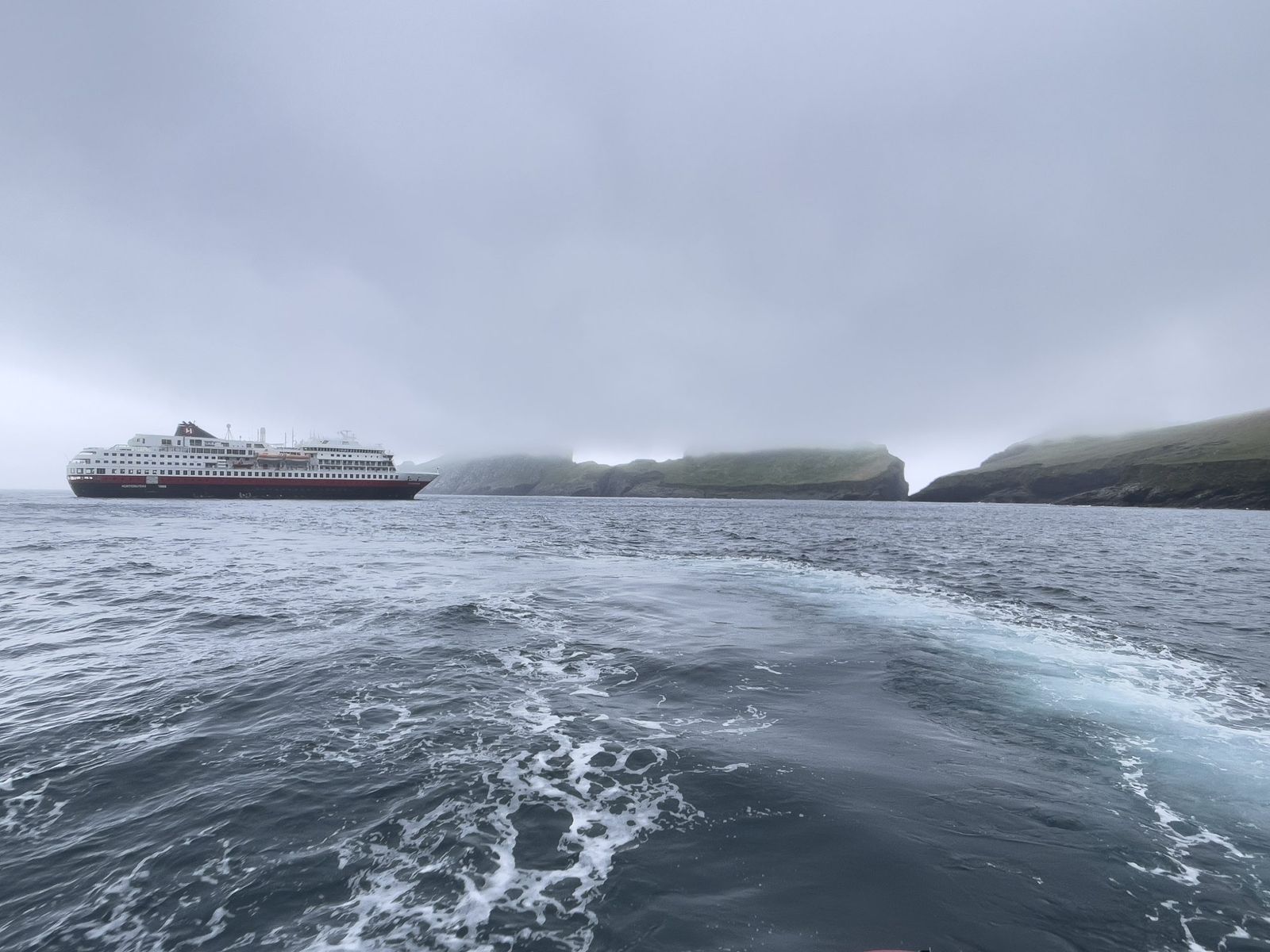
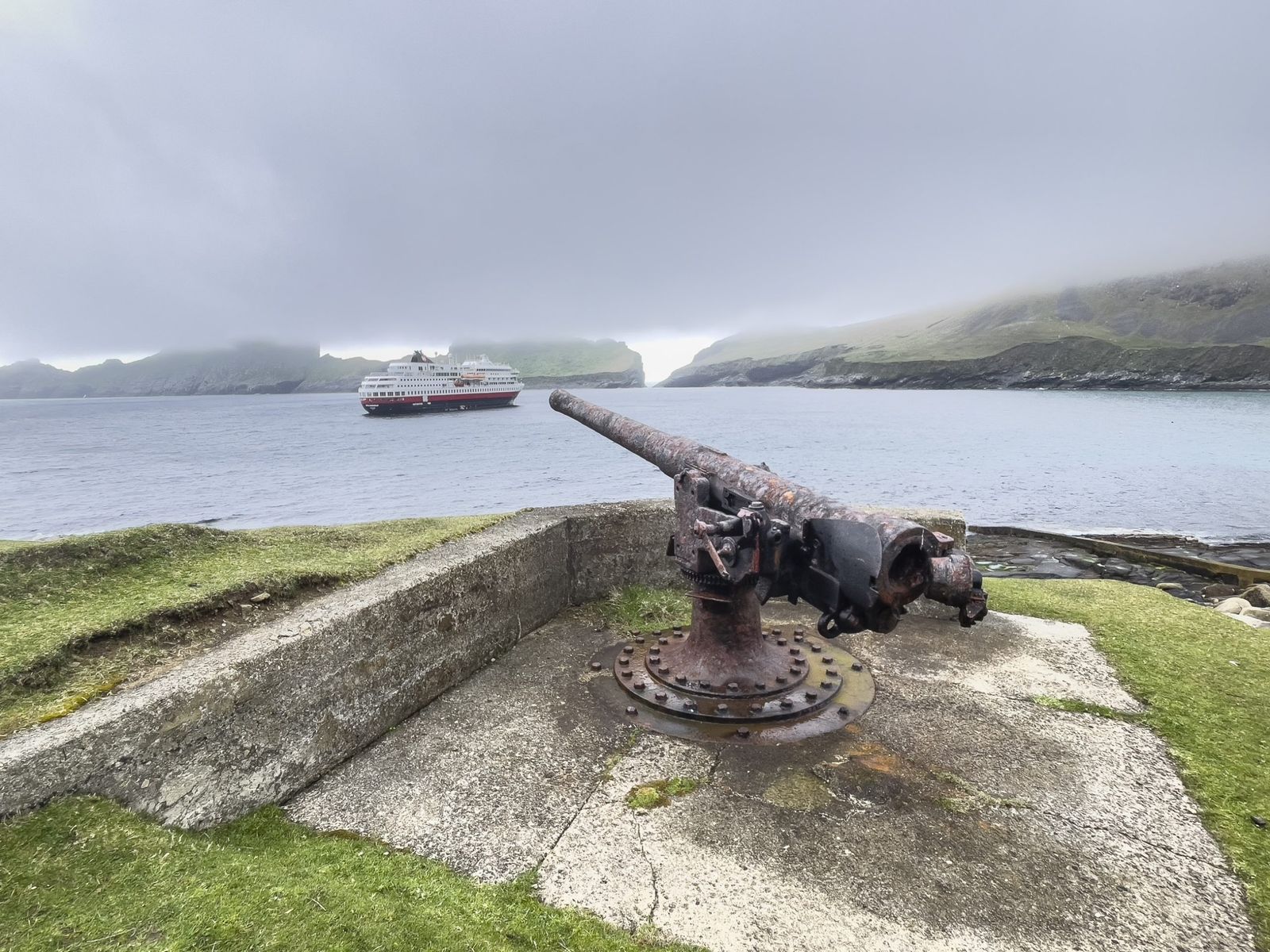
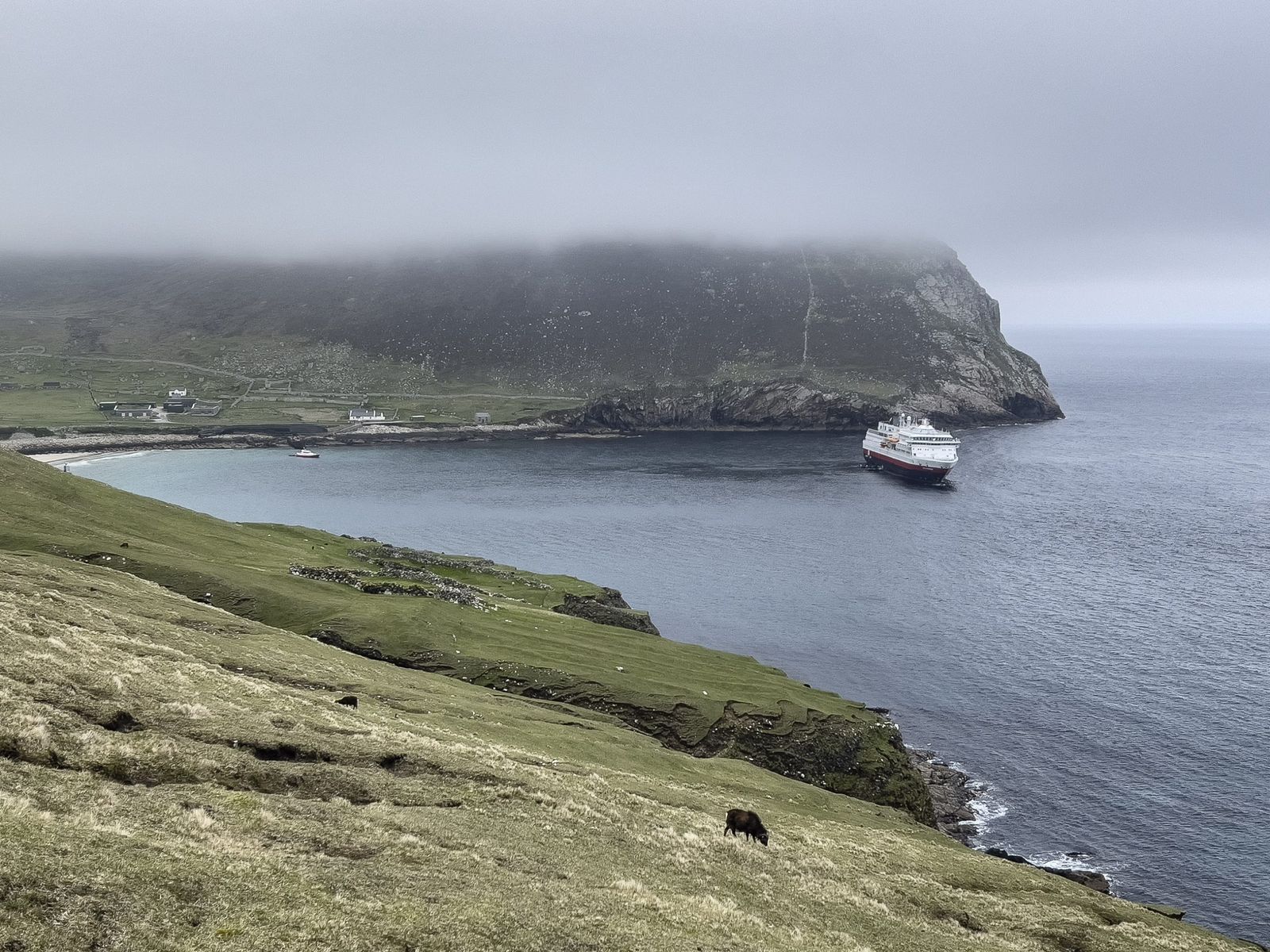
The trip out to the island was uneventful. I was lucky enough to sit next to Andrew, a retired British Foreign Office official, now living in Chile. A very interesting chap! We saw several pods of dolphins close to the boat - none close enough to photograph. The weather was very misty and St Kilda came into view quite suddenly, for us to realise - horror of horrors - that there was a Hurtigruten cruise ship in the bay, with a flotilla of zodiacs ferrying the 250 passengers to and from the shore: all of them wearing red jackets. The gun that you see, whilst well positioned, was unfortunately out of action ;)
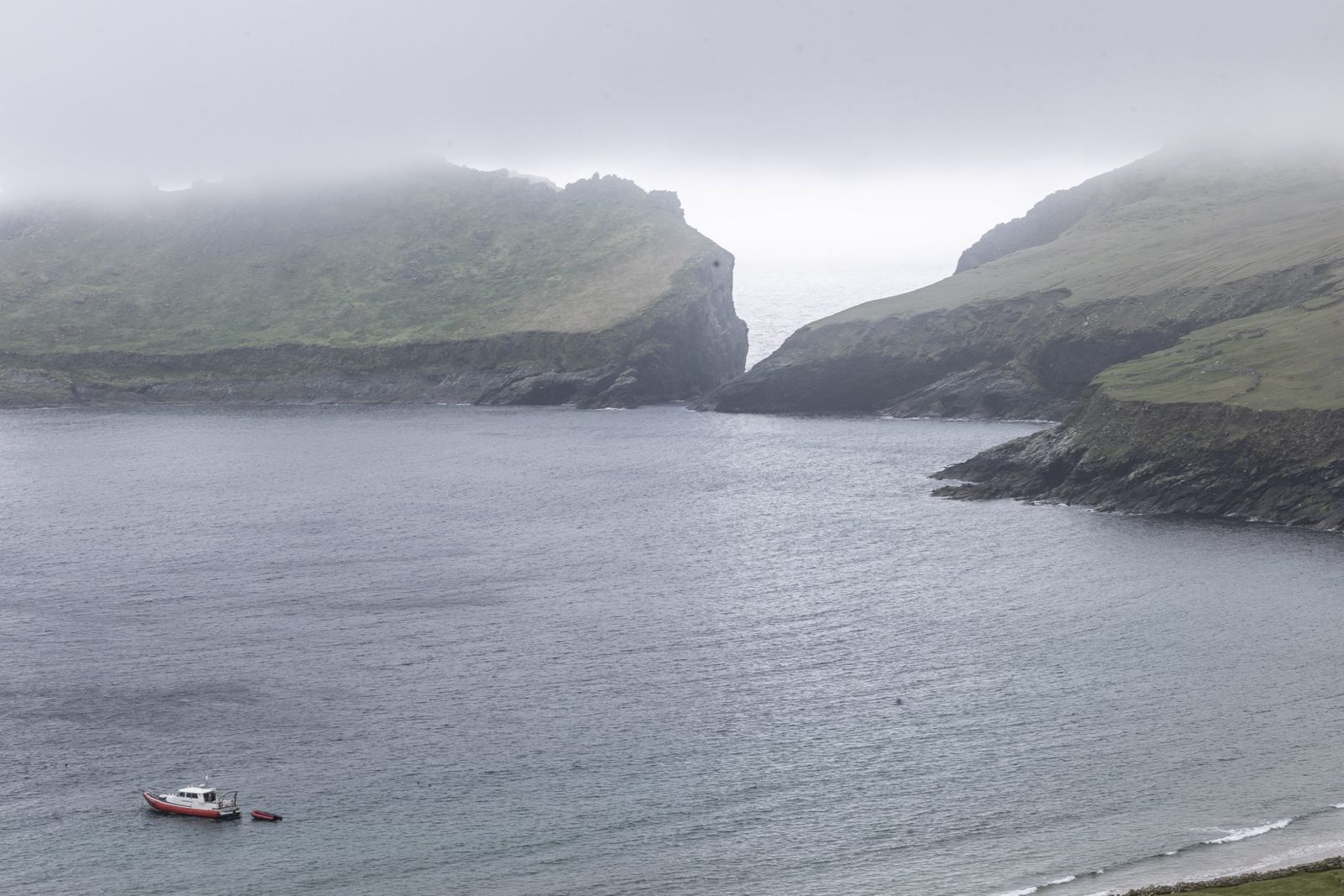
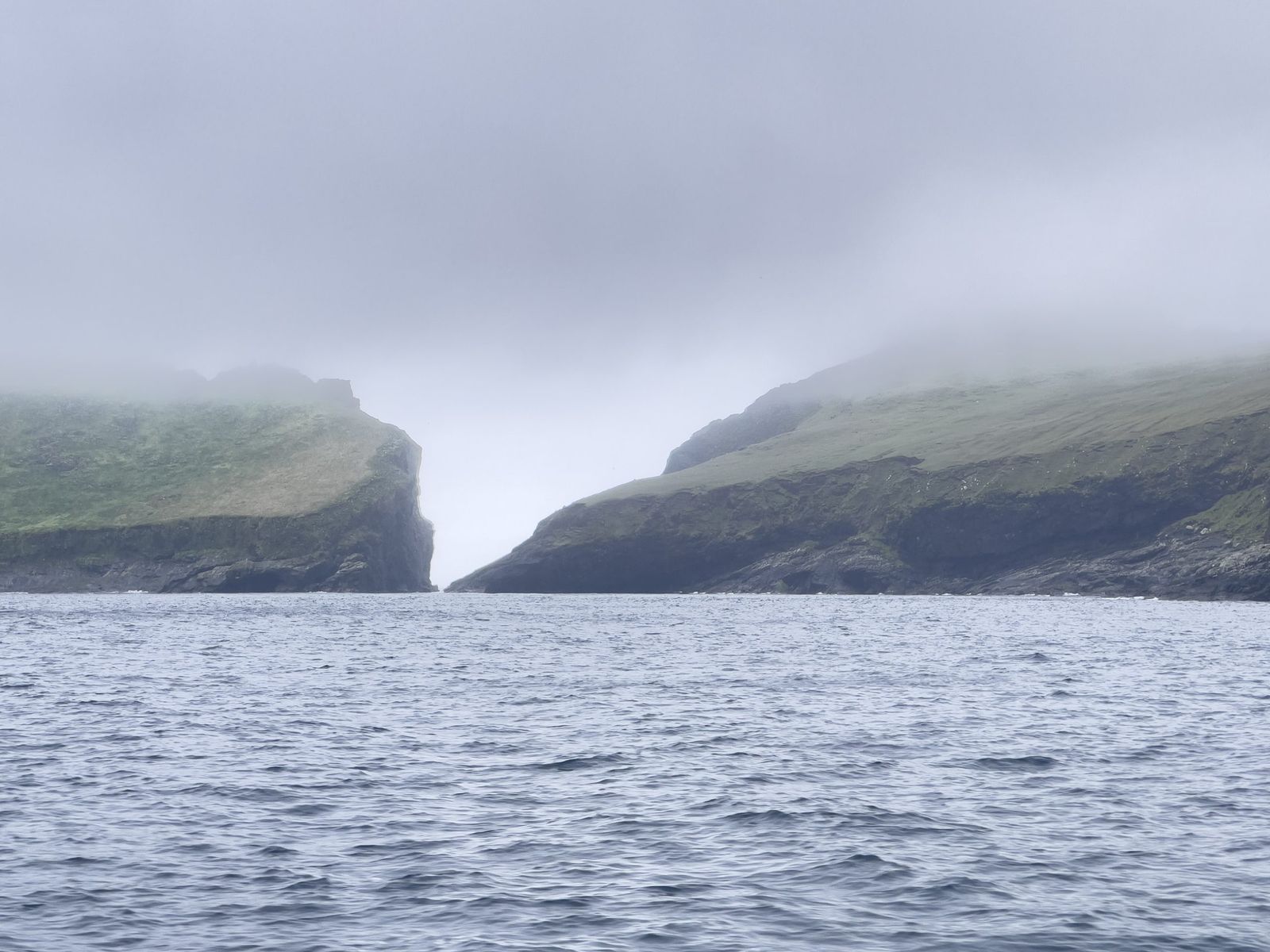
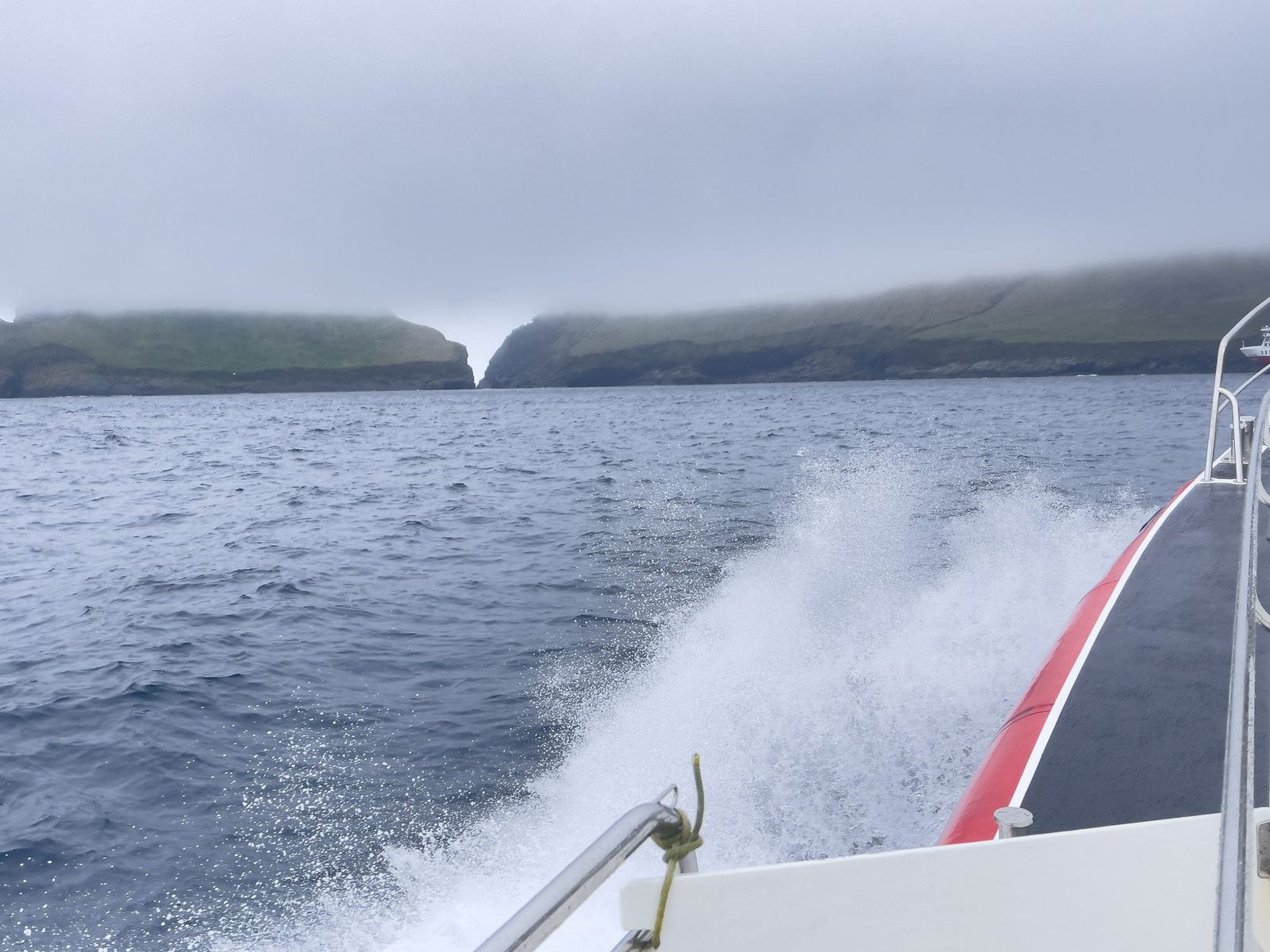
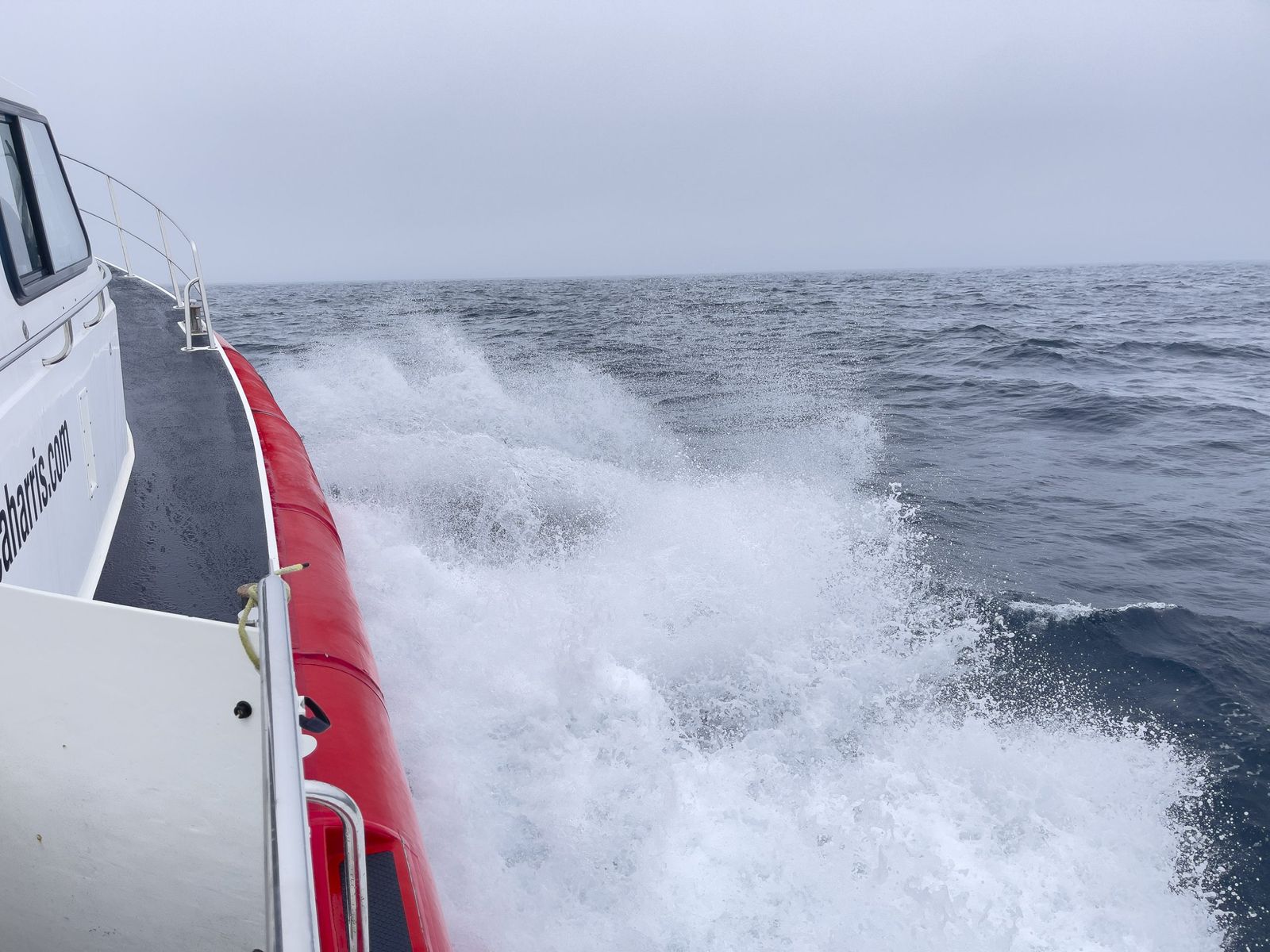
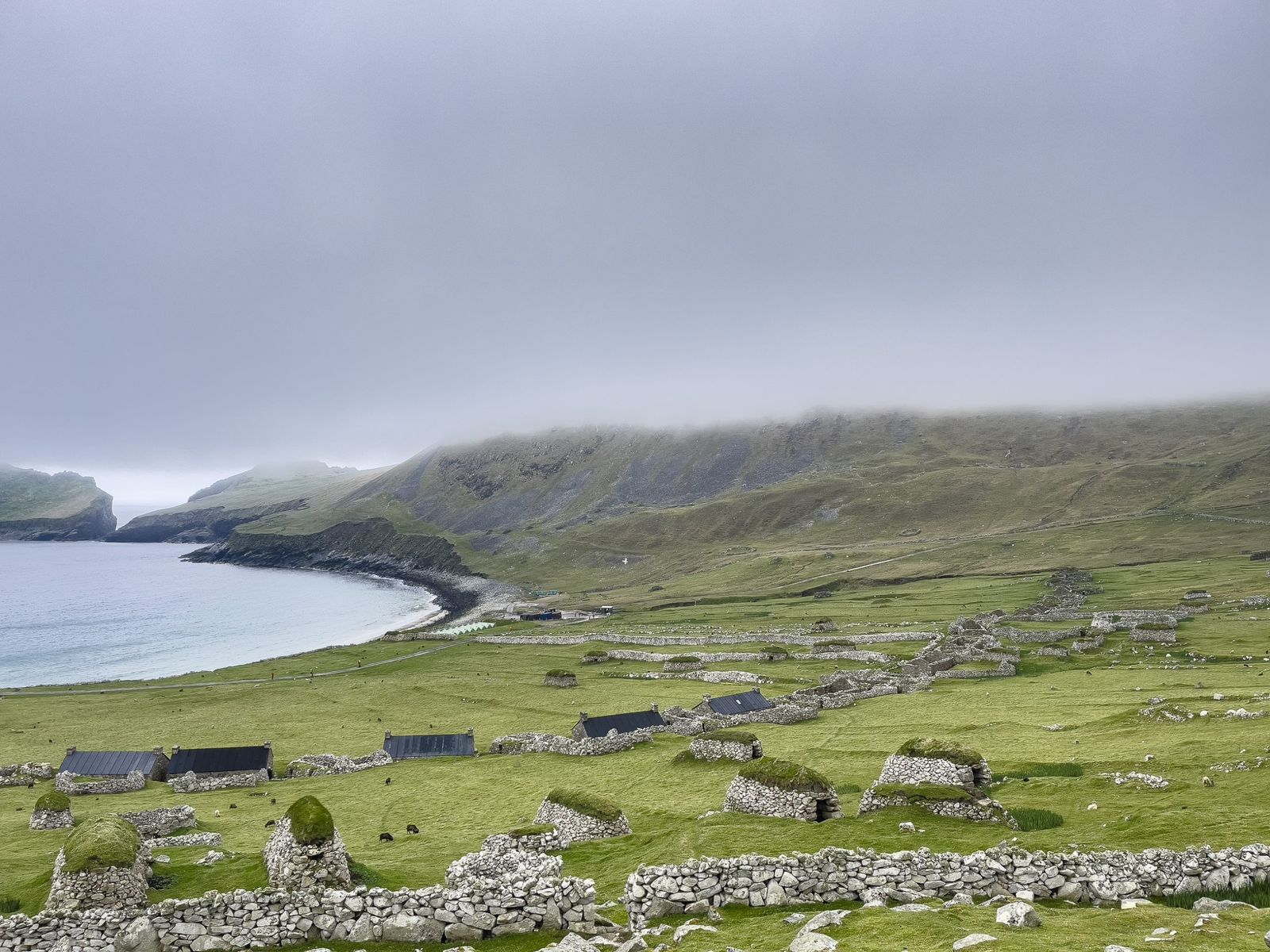
Once ashore, we were given a short briefing by one of the National Trust for Scotland volunteers. He advised that, because of the low cloud and poor visibility, we stay around Main Street - where the population lived when the island was inhabited. The presence of tens of the red-jacketed cruise passengers made that not very desirable for me, and is why you do not see any photographs taken along the route. That said, the individual buildings, some restored, were all very interesting, especially the museum. Each house has a piece of slate at the door listing the occupants at the time of the evacuation.
I had read quite a bit about ‘The Gap’ where a lot of the hunting for sea birds was done and was confident enough about being able to see or sense the 400 metre drop from there, I decided to hike up. The route is flanked by cleits which made navigation very simple and which created an incredible atmosphere as I hiked up there in silence. I sat up there for a little while, just taking in the scene and imagining how the people had lived out there. I then descended to a spot above Main Street and ate my lunch, during which I was treated to the site of a golden eagle flying in front of me.
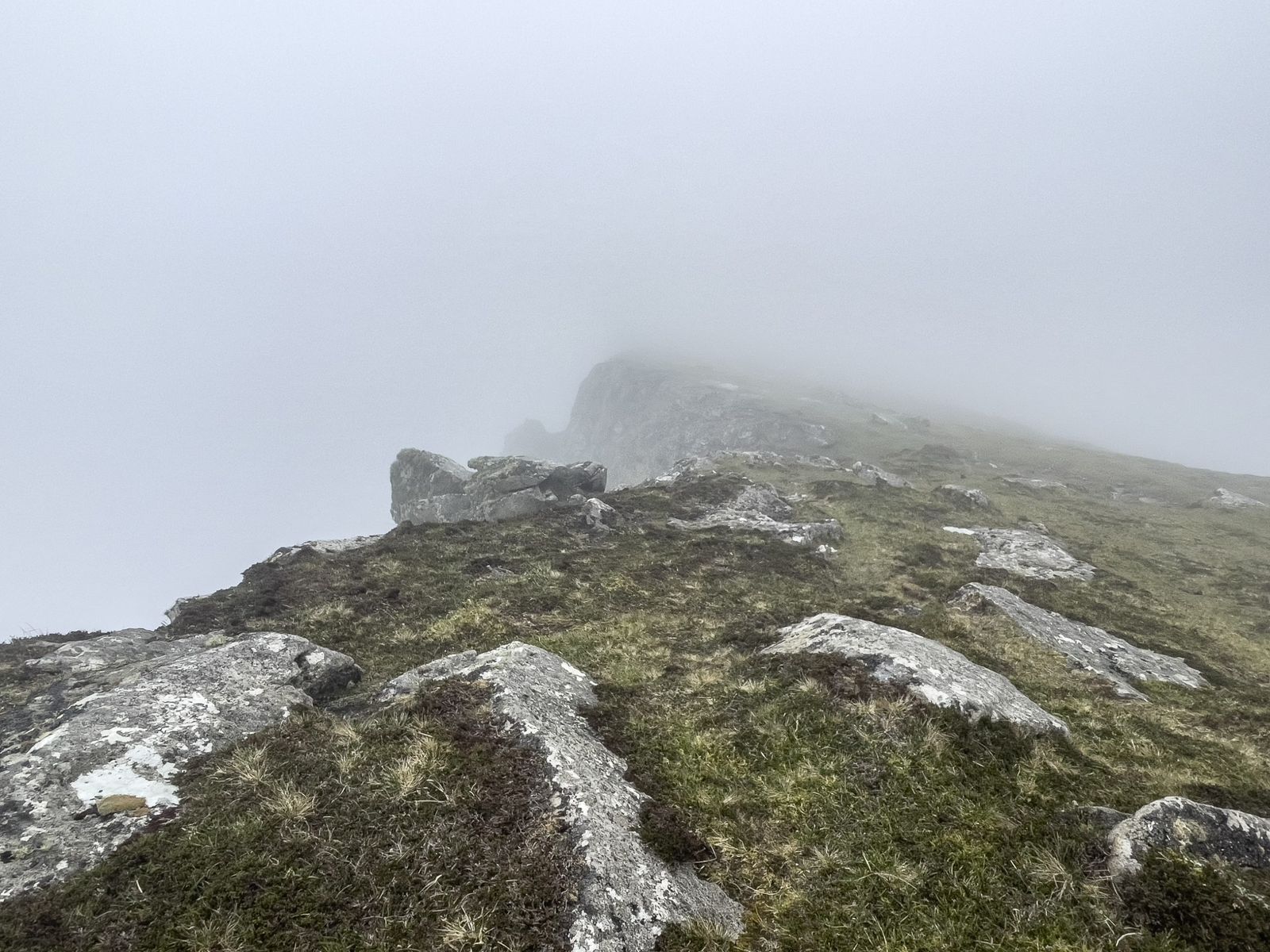
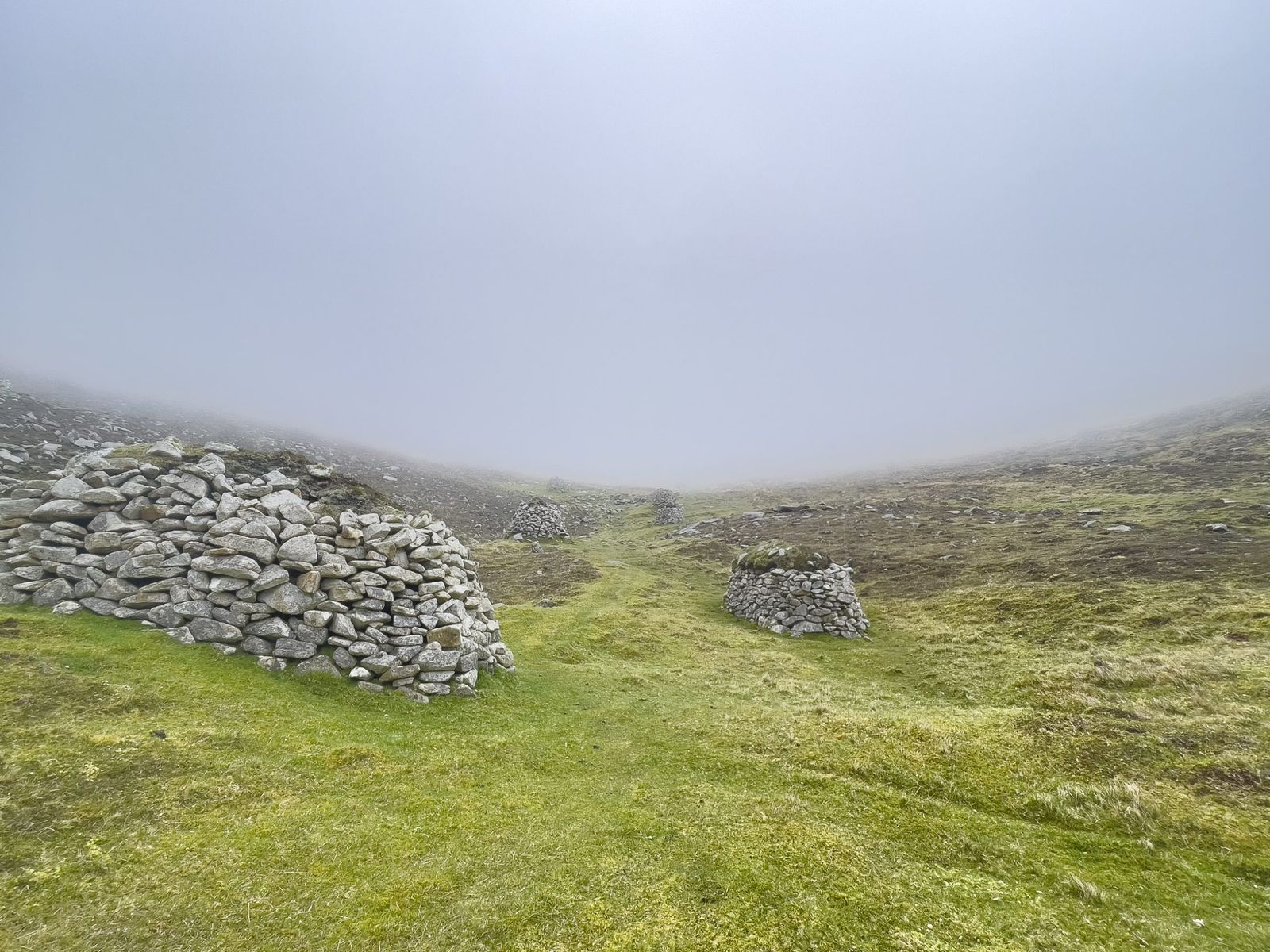
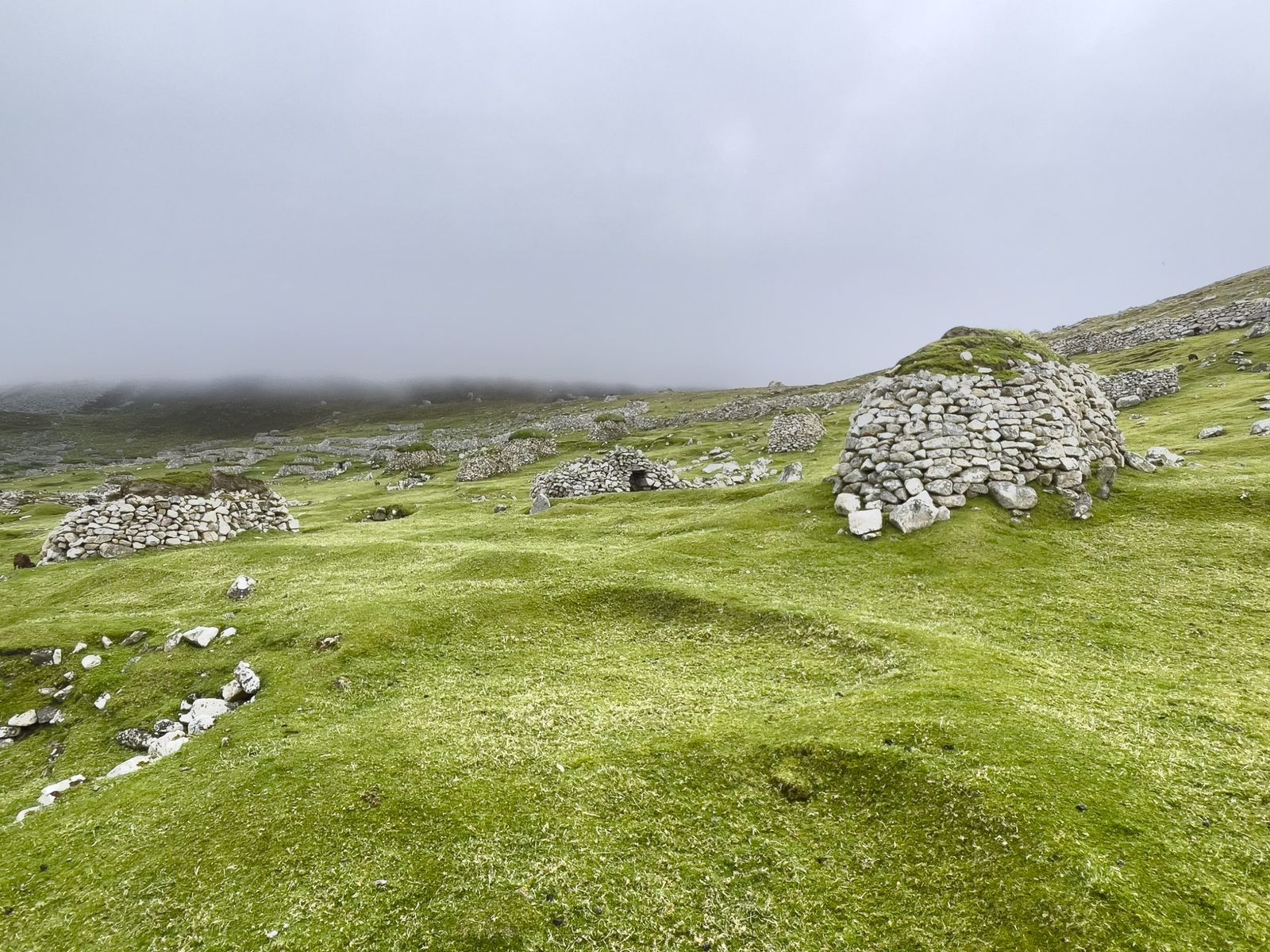
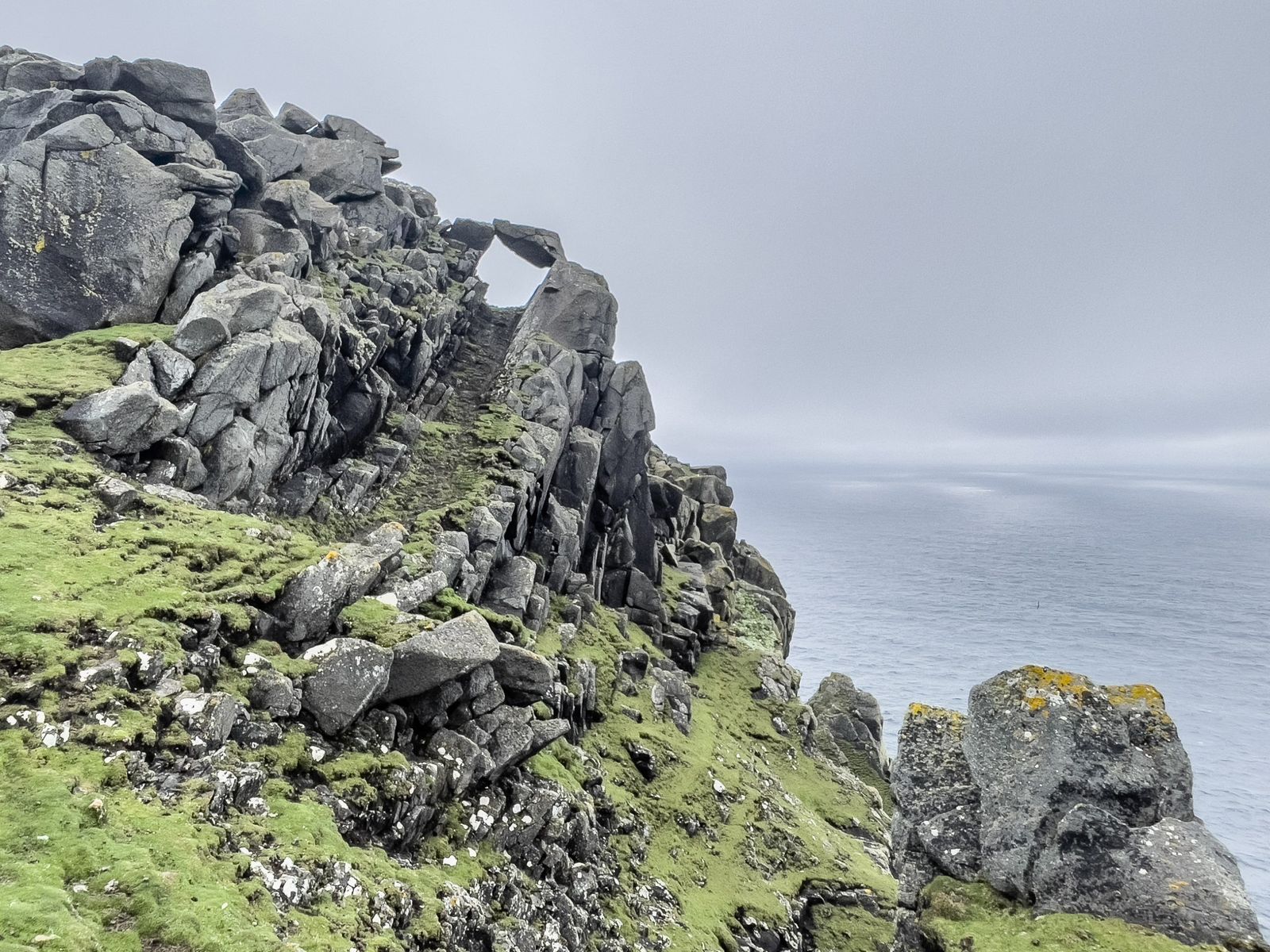
After a little more time meditating in the eery silence, I set off to hike to the other side of the island for the climb up to the Mistress Stone. As I climbed, the cloud starting to lift and the views got better. On a clear day it would have been absolutely stunning but I think the mist and cloud added a lot of atmosphere to the overall experience.
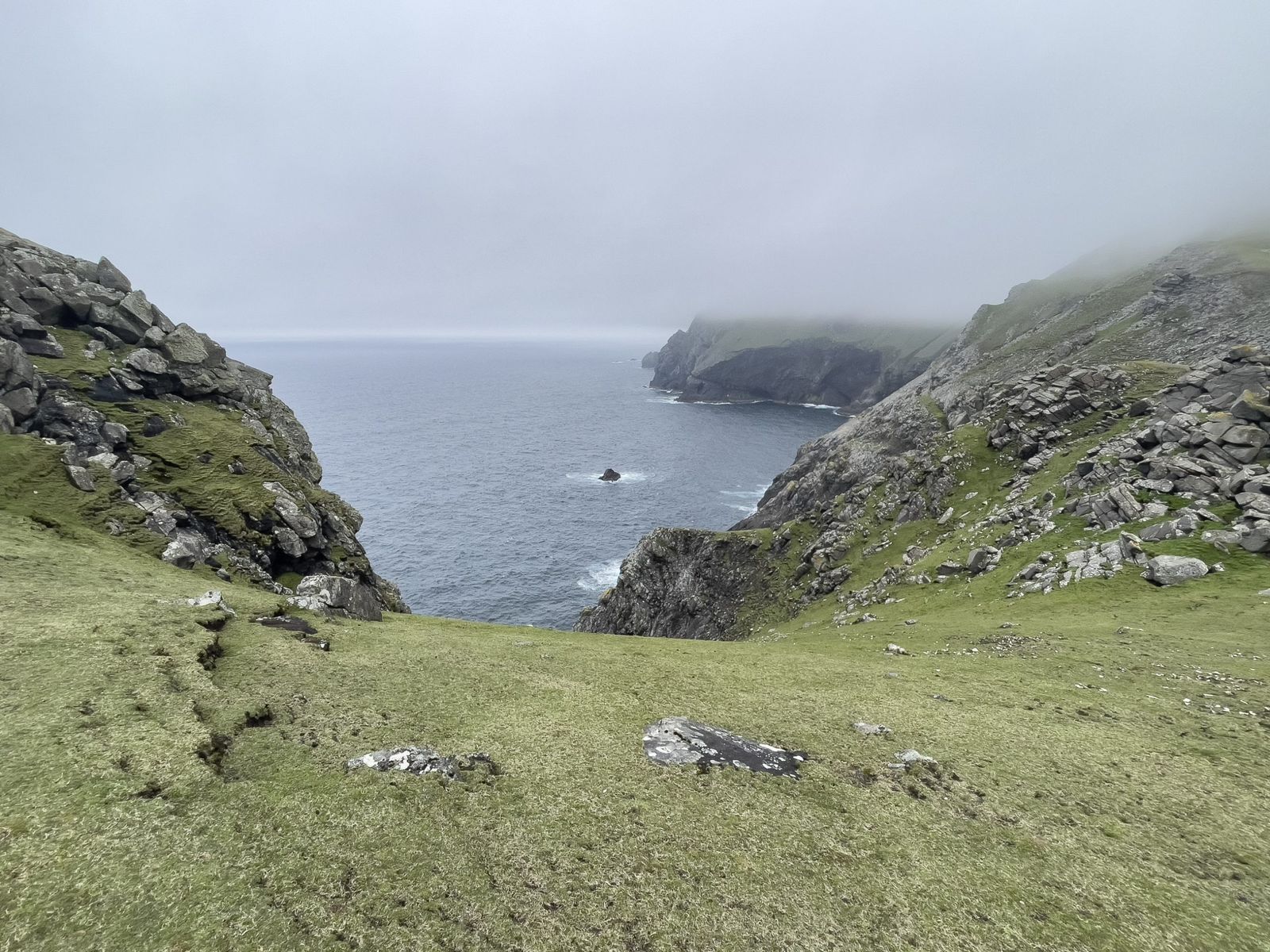
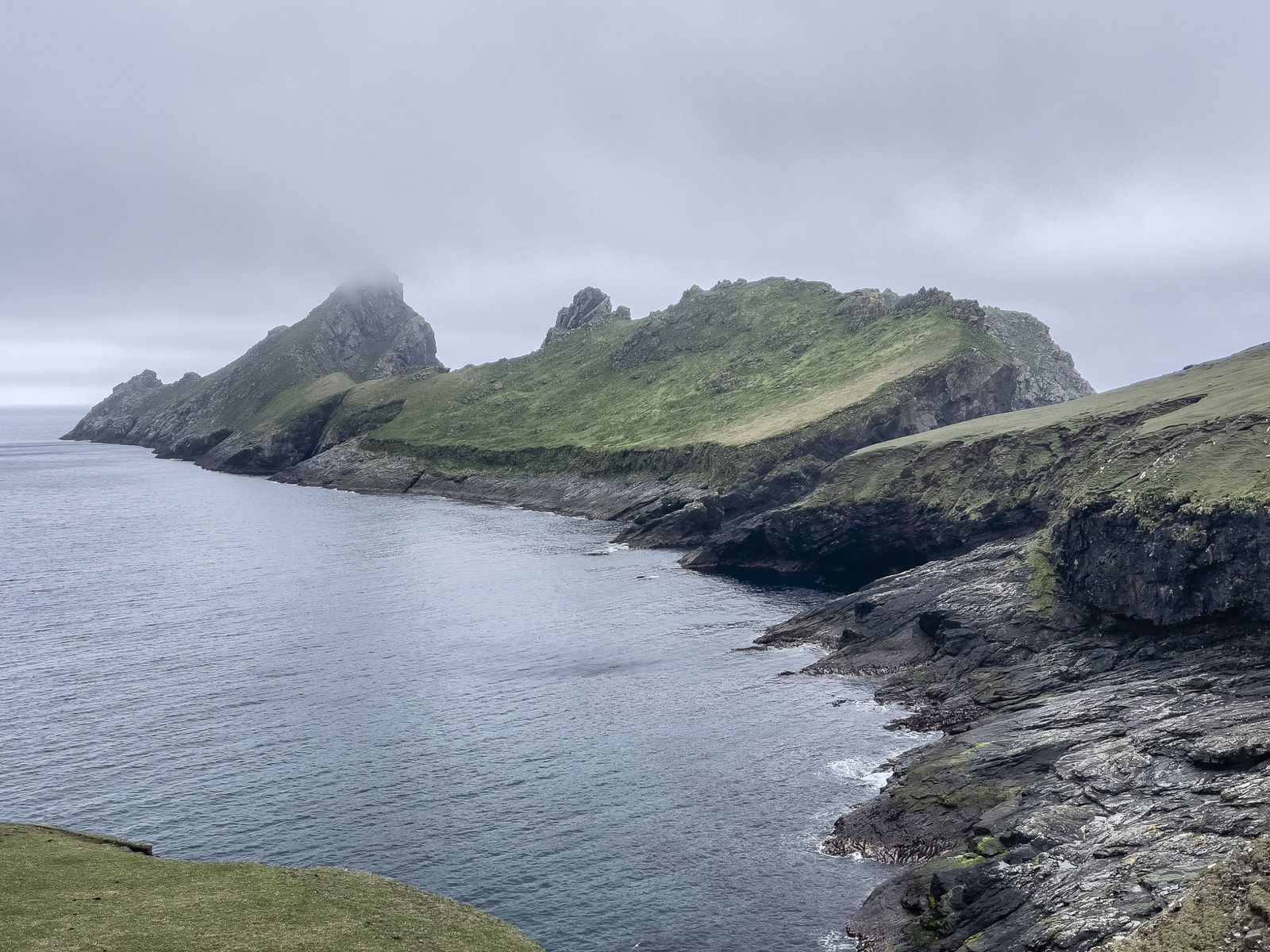
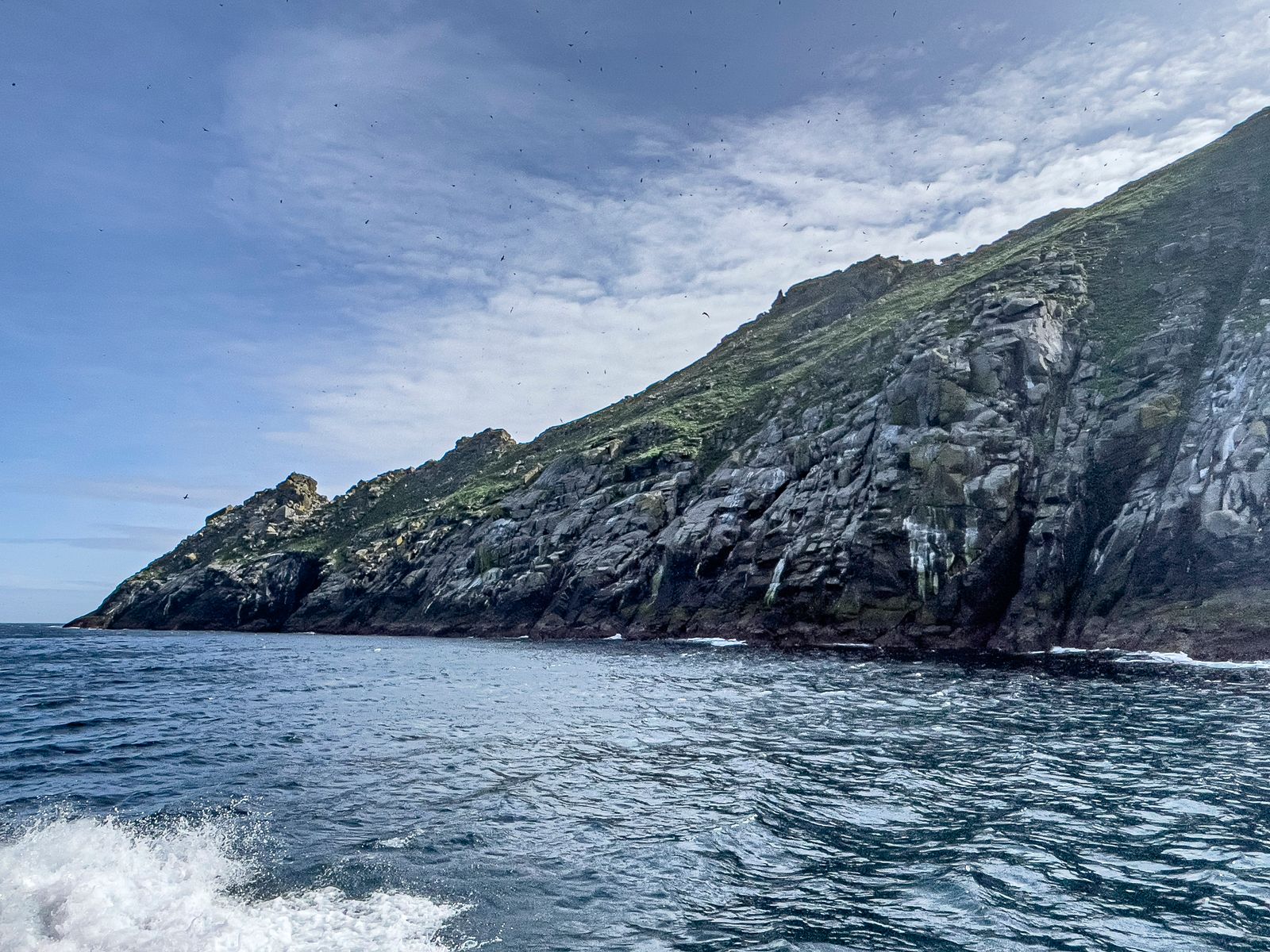
Now running slightly short of time, I made my way back down to the loading point and a few minutes later, after a welcome coffee and a piece of ginger cake, we left Hirta for a cruise along the cliffs of Dun, with hundreds of sea birds circling above, before heading over to Borerary and its sea stacks. We also got a good view of the cliffs under ‘The Gap’ where I had been earlier.
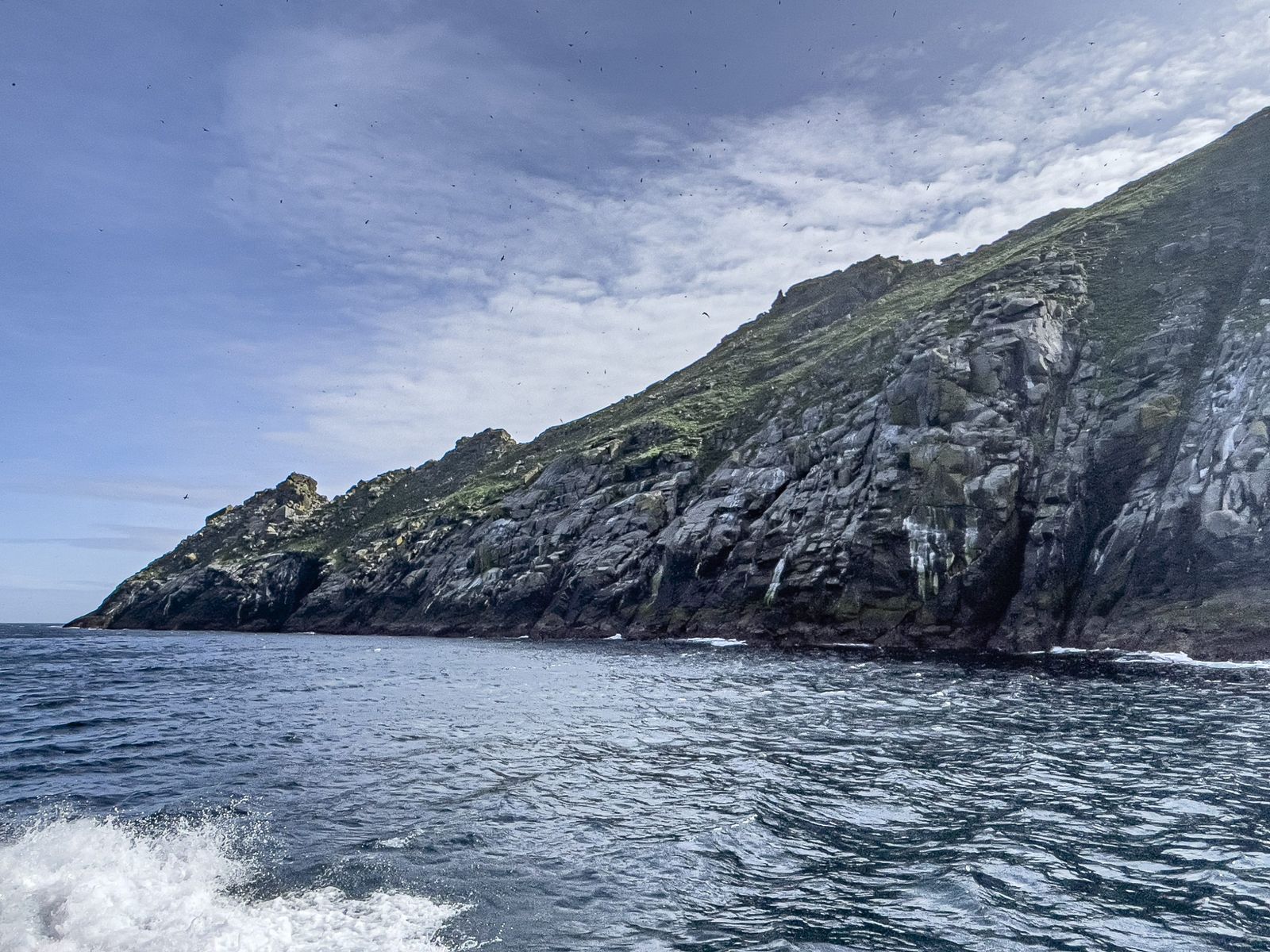
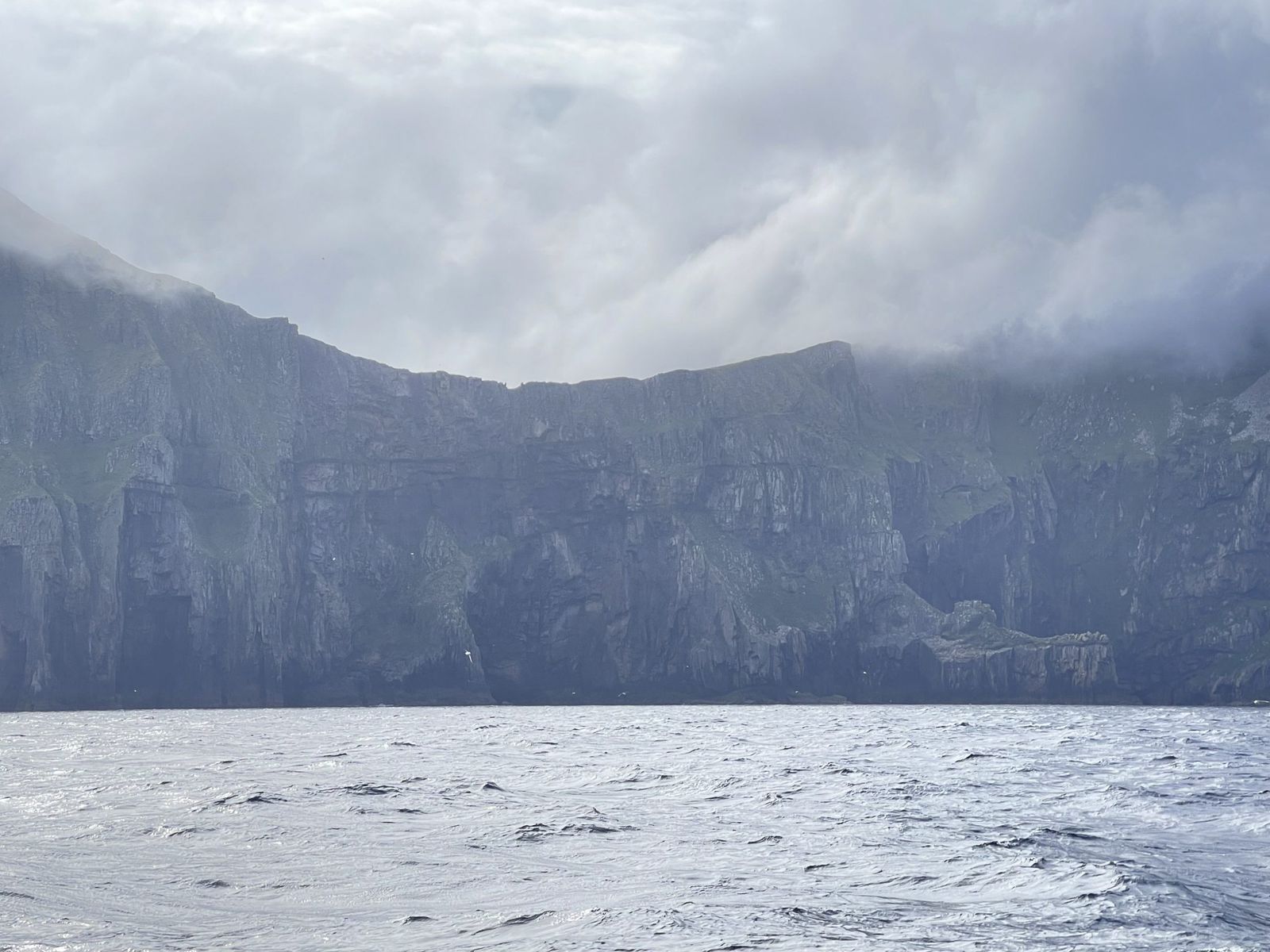
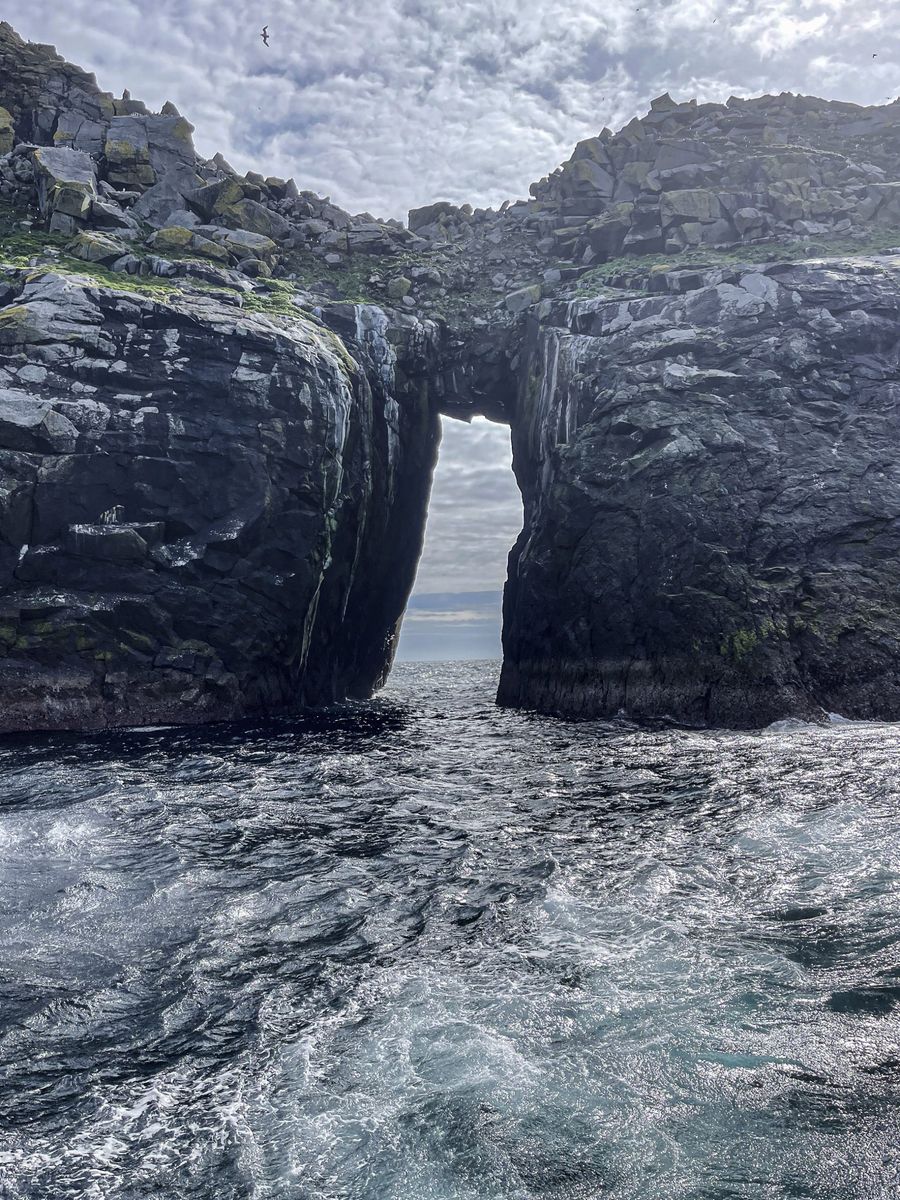
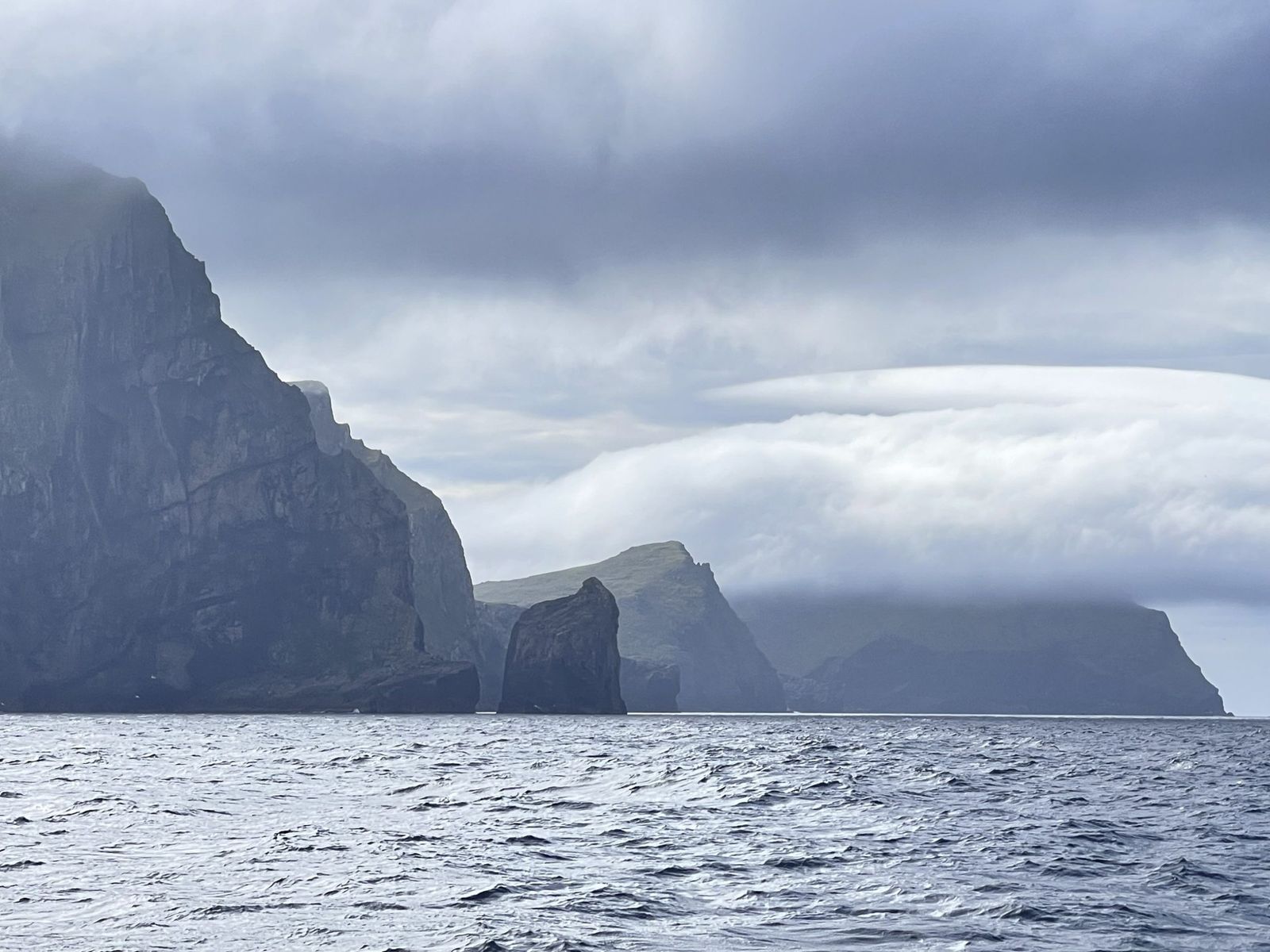
The sun burst out as we made the 15 minute trip over to Stac Lee and Boreray - it looked absolutely amazing. Stac Lee was another of the hunting locations for the people of St Kilda - more so than Boreray itself, which is much harder to land upon. Here’s a photo of Stac Lee with a close-up of the rocky ledges that men and boys used to climb in bare feet!
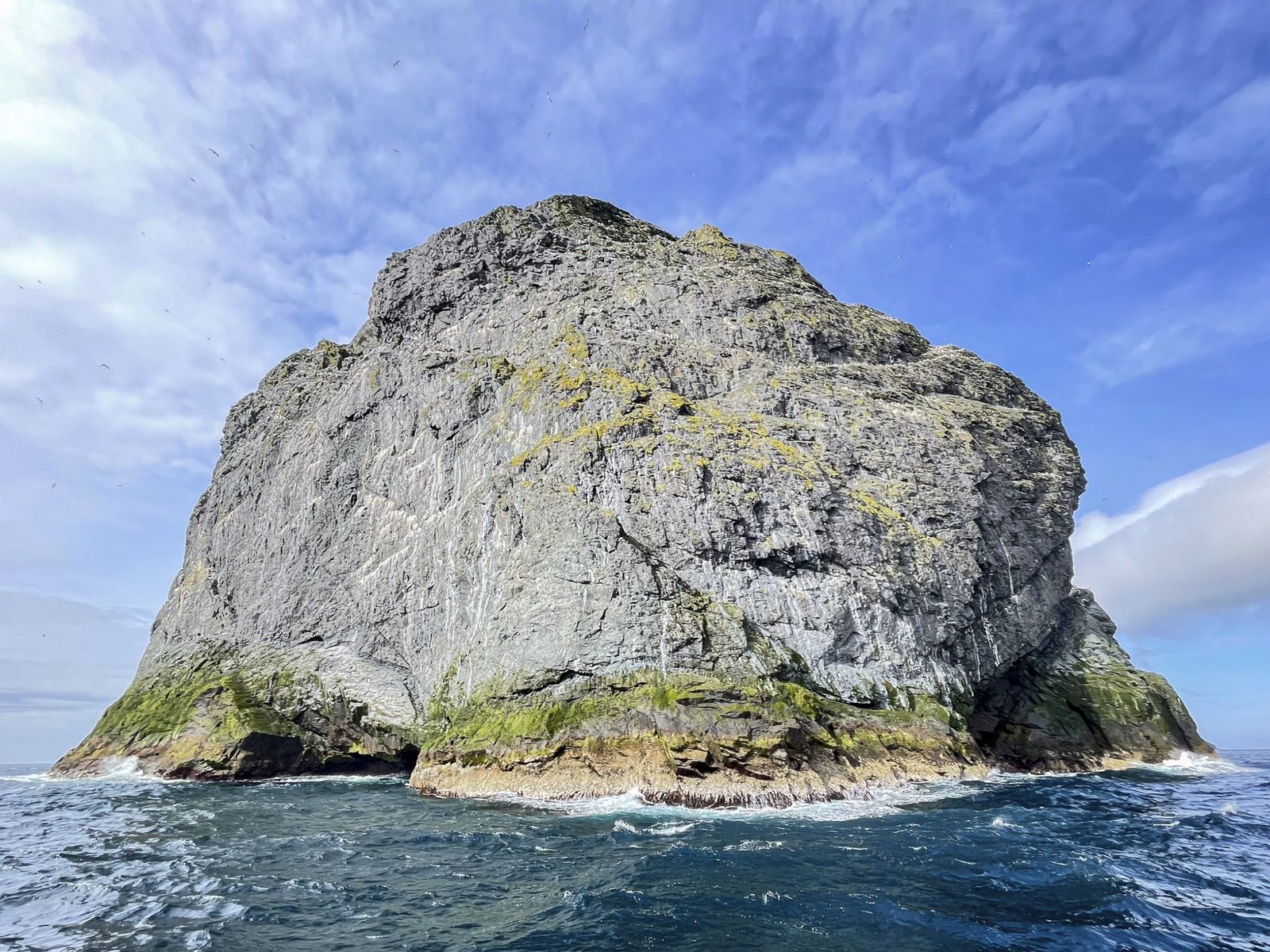
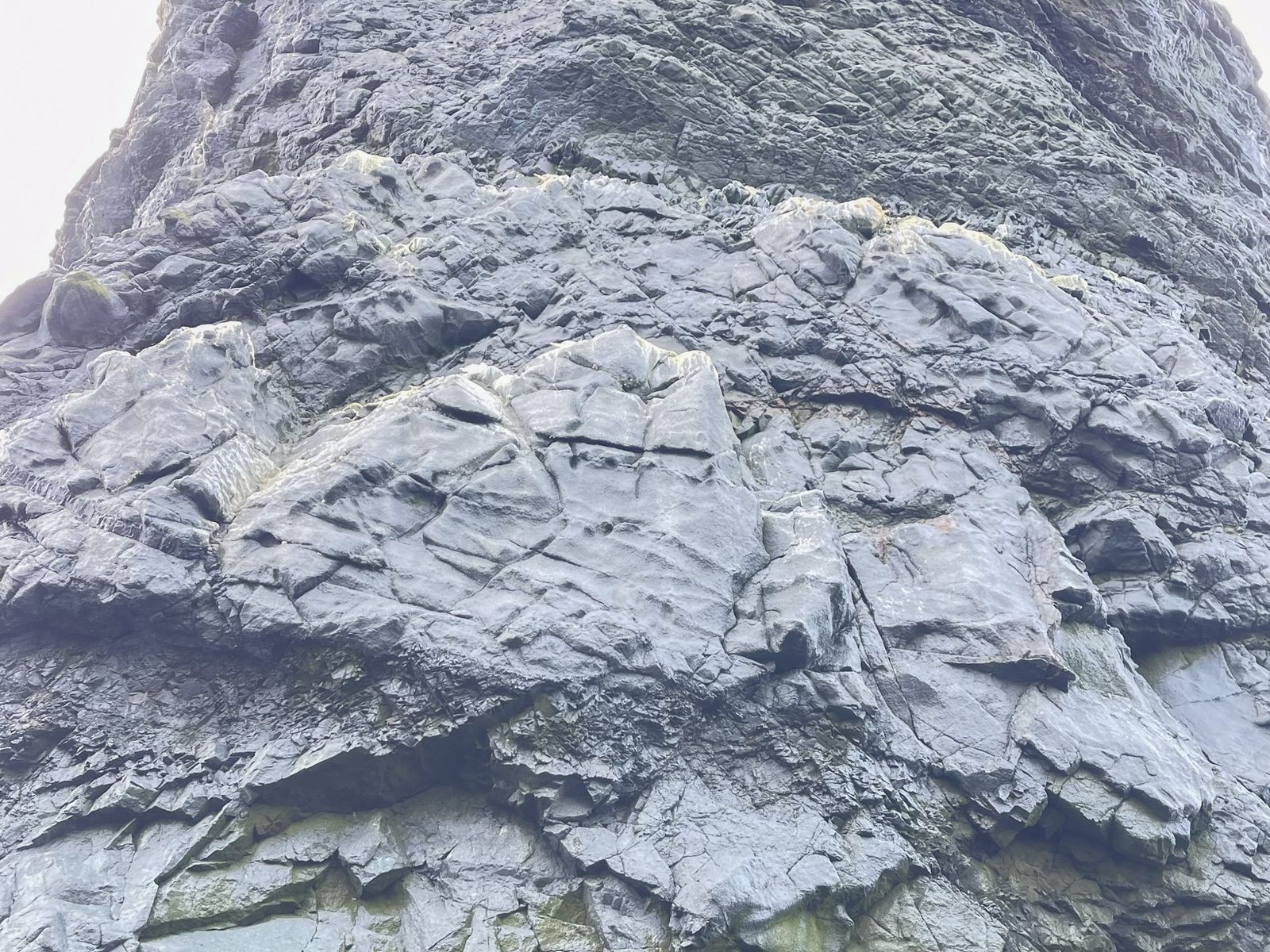
It’s only a short distance then to Boreray. We spent about half an hour slowly cruising around it, taking in the beauty, the drama and the thousands of sea bird nests. Those white dots in the photos below are sea bird nests.
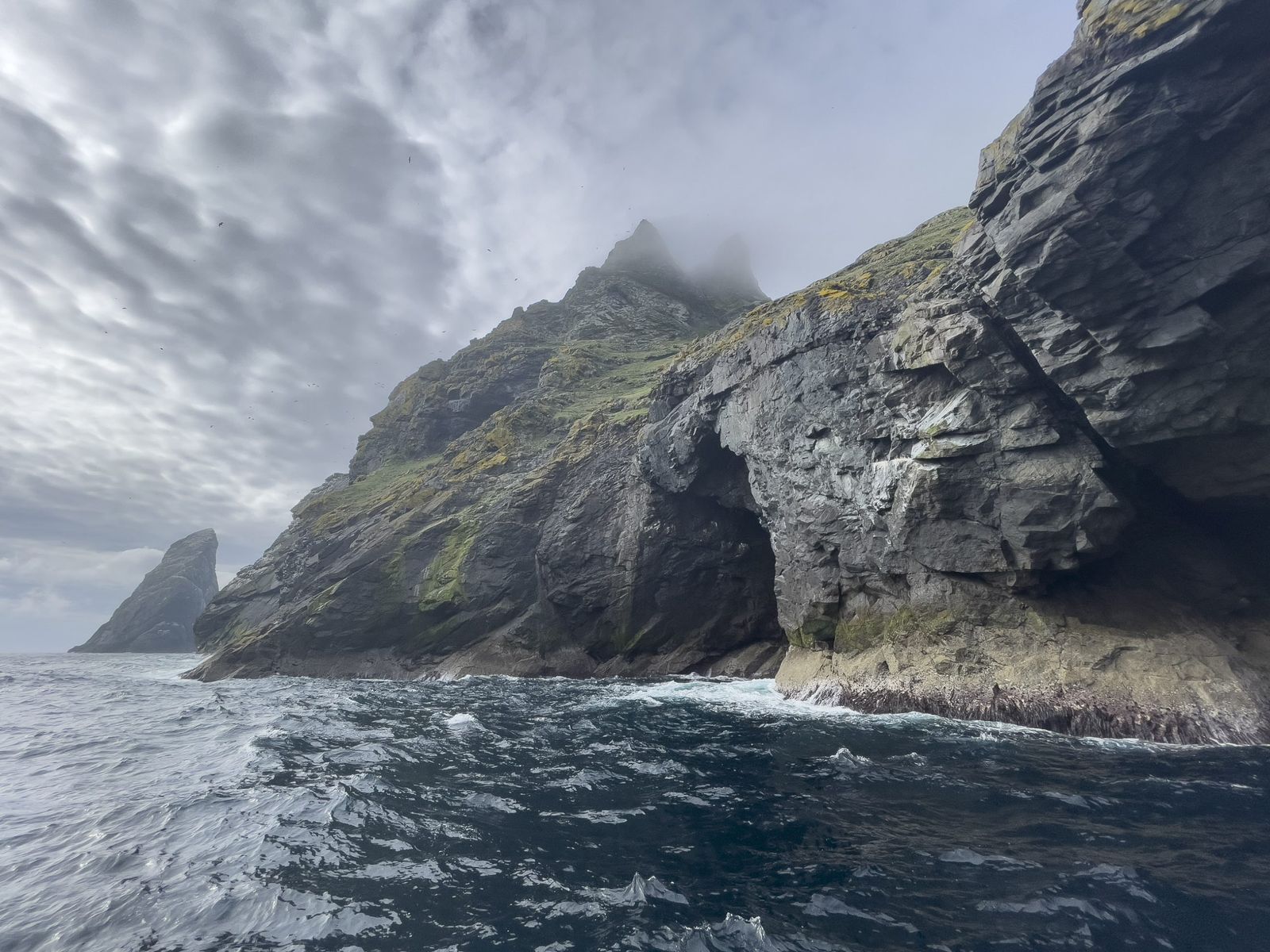
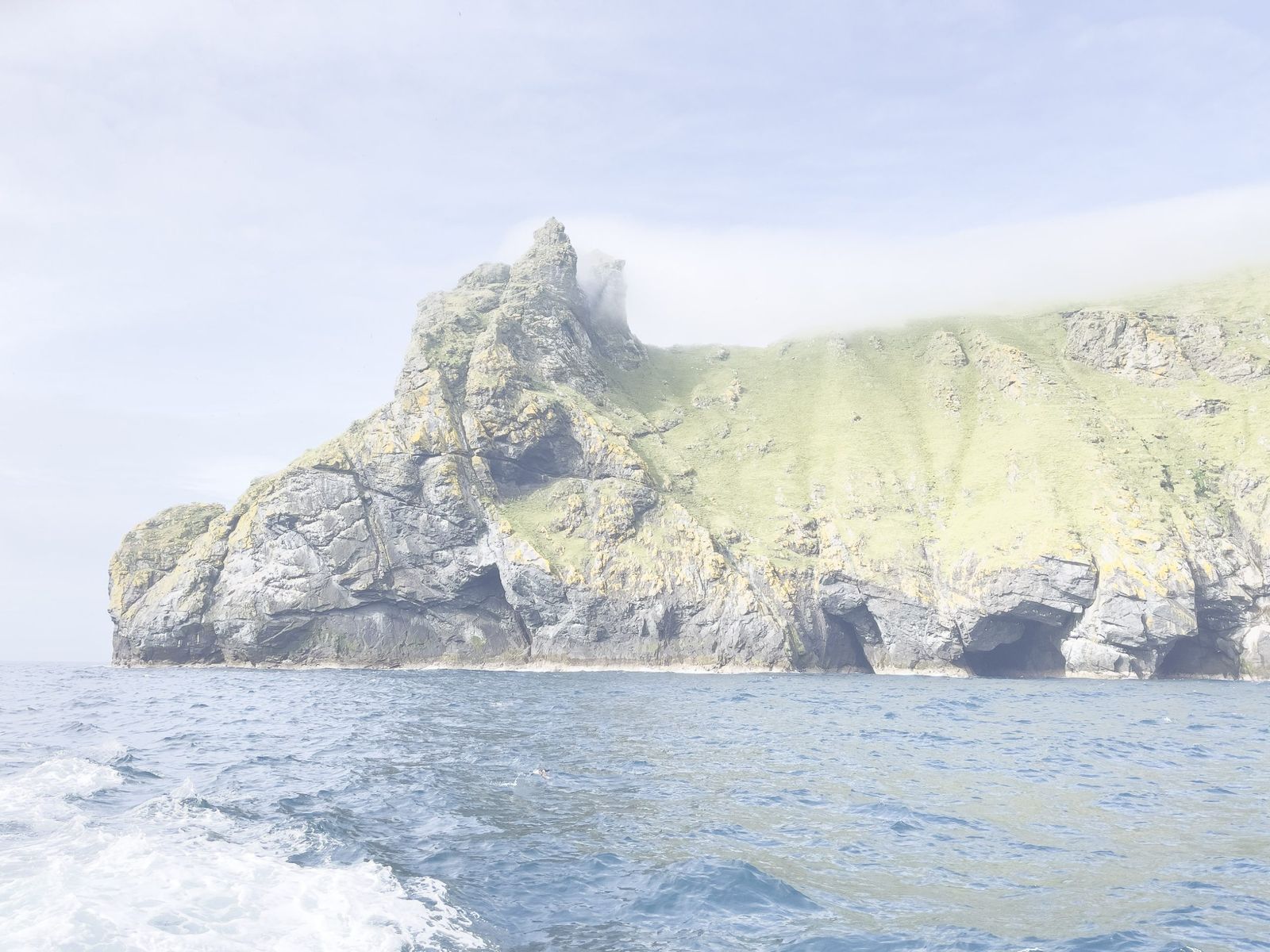
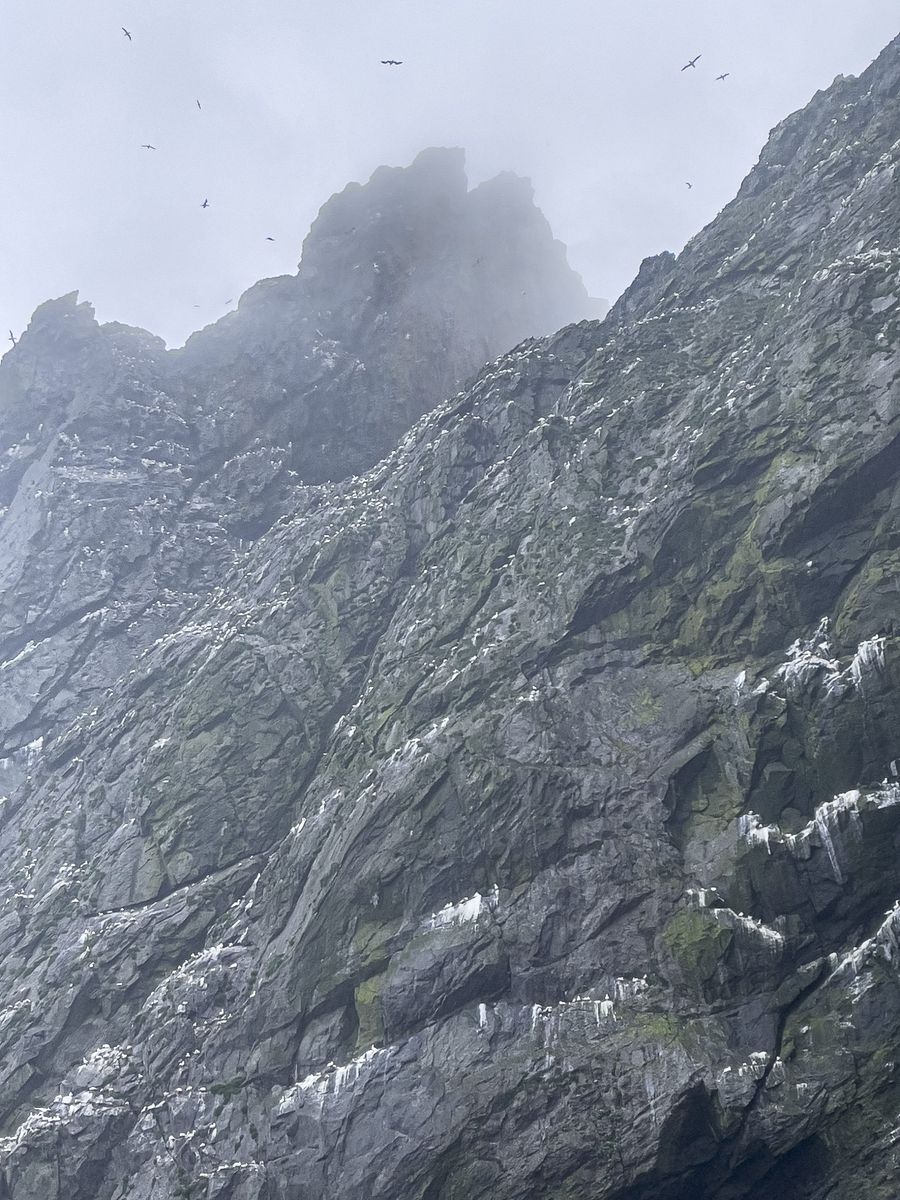
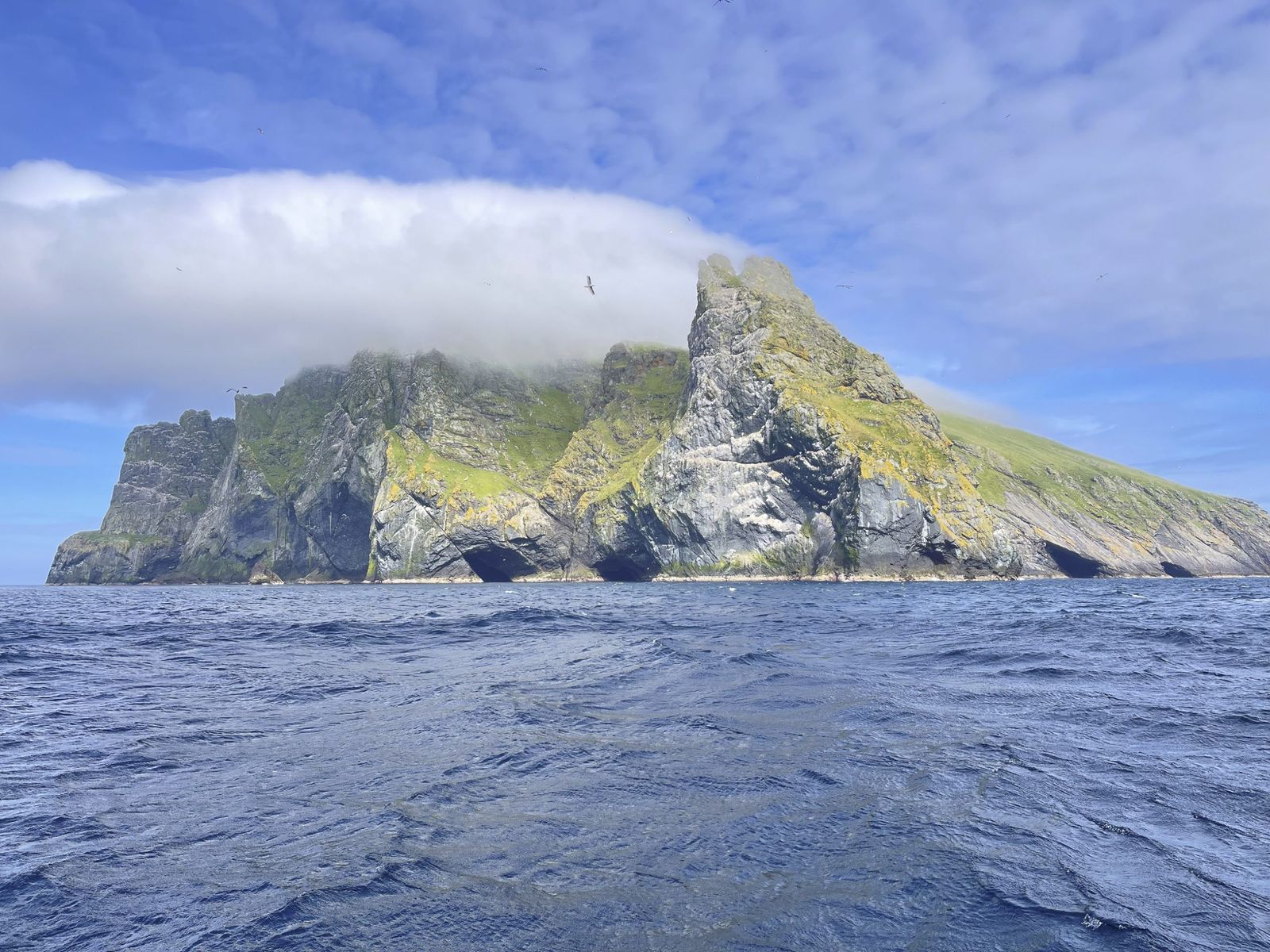
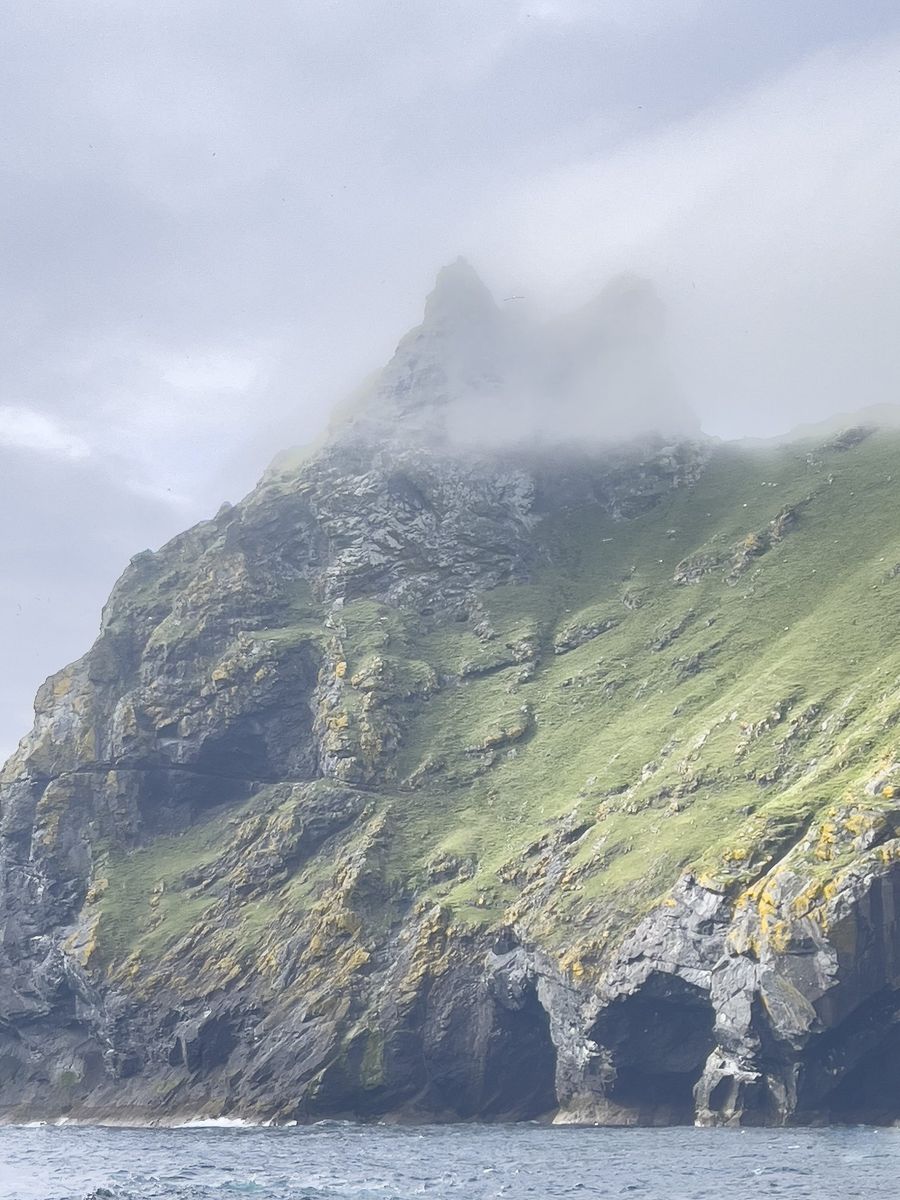
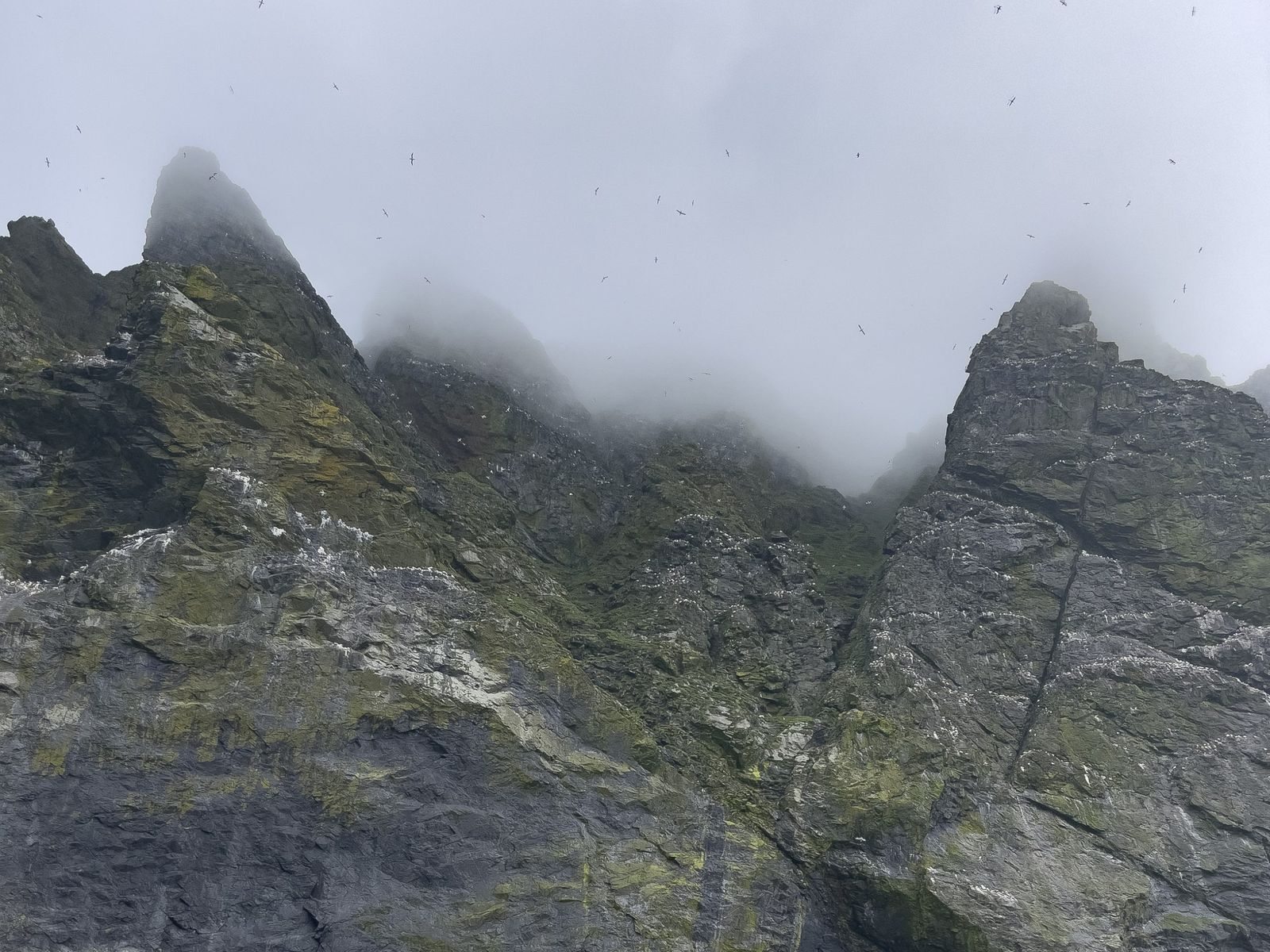
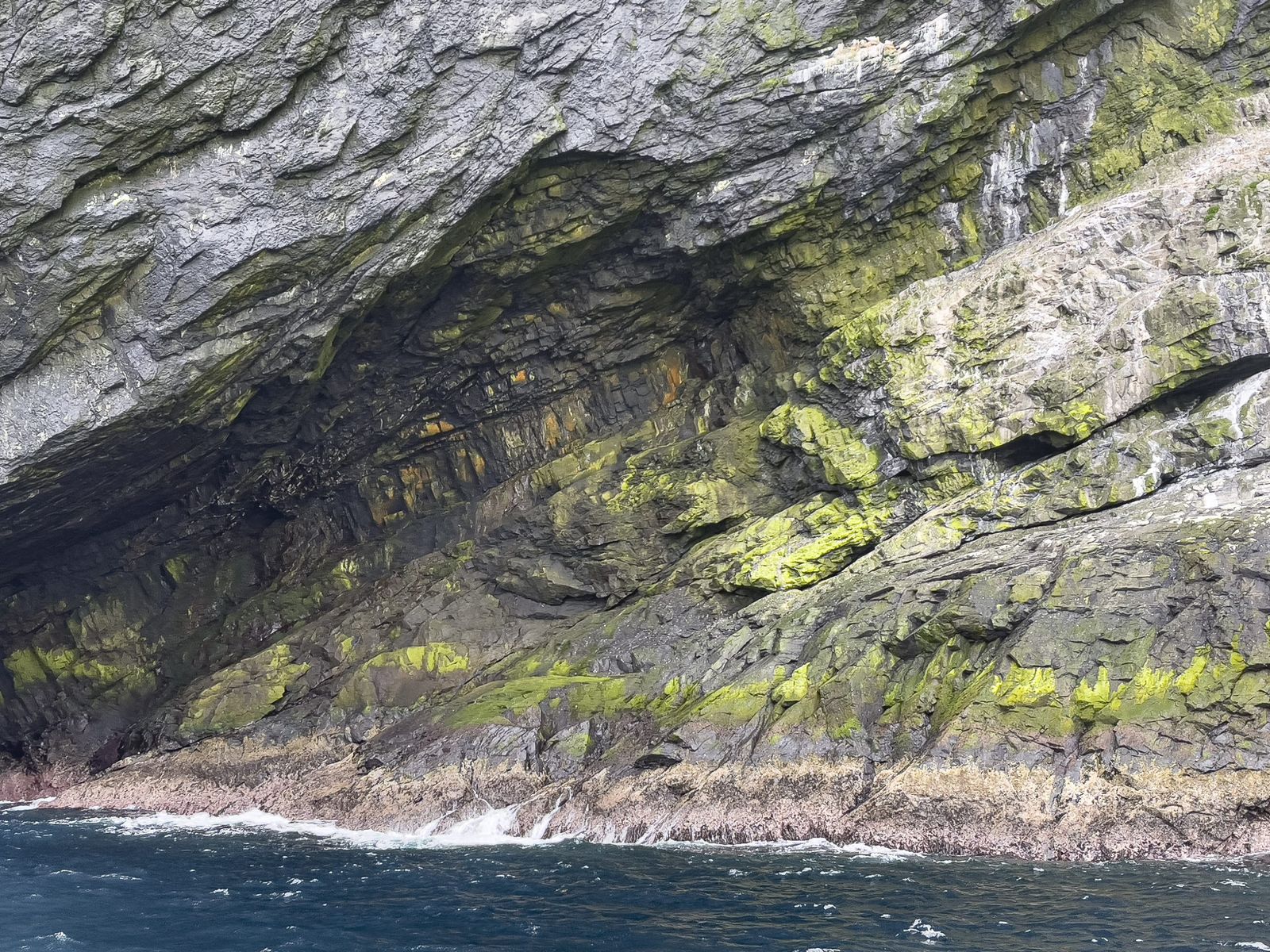
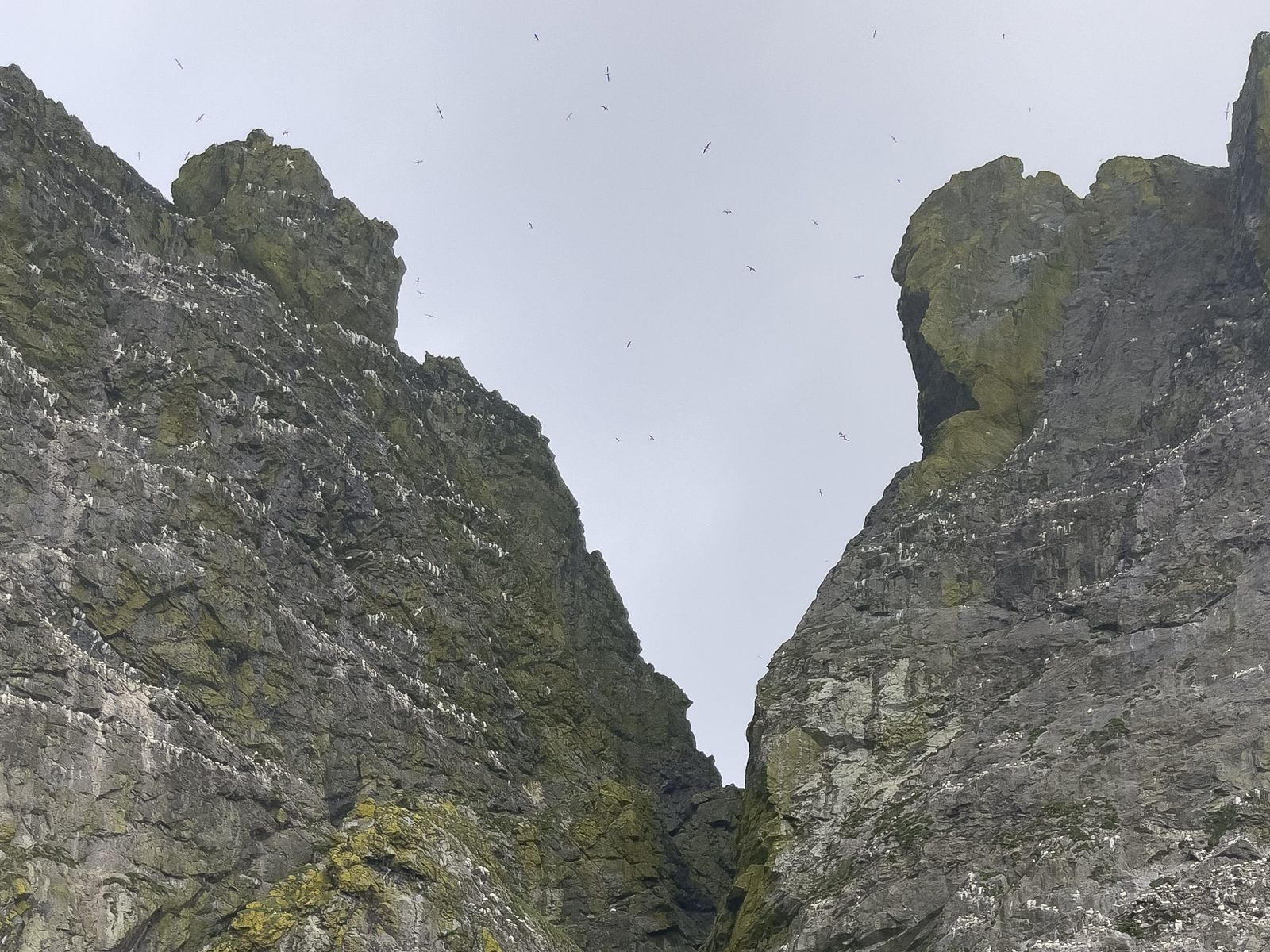
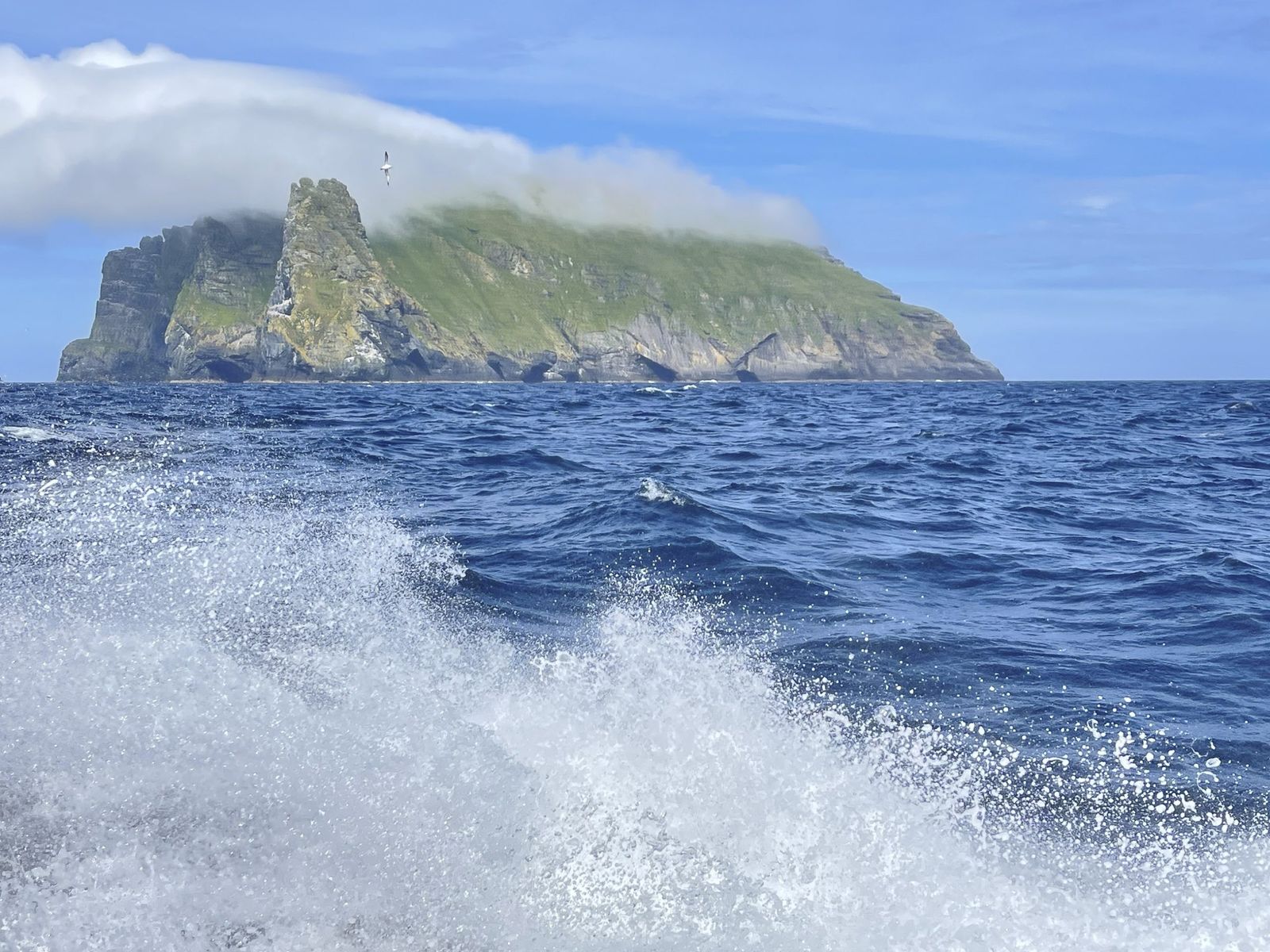
Our final stop was Stac Armin. In 1727, three men and eight boys on a hunting trip from St Kilda were stranded there for nine months, when a smallpox epidemic swept through the village on Hirta, killing 94 people. Amazingly, all of them survived, making it through the winter by living off fresh water, birds, eggs, and fish caught with a bent nail. They were eventually spotted and rescued by a tax collector making the voyage out to St Kilda. In the image below, I have highlighted in red the area of the rock in which the men made their camp. Imagine!
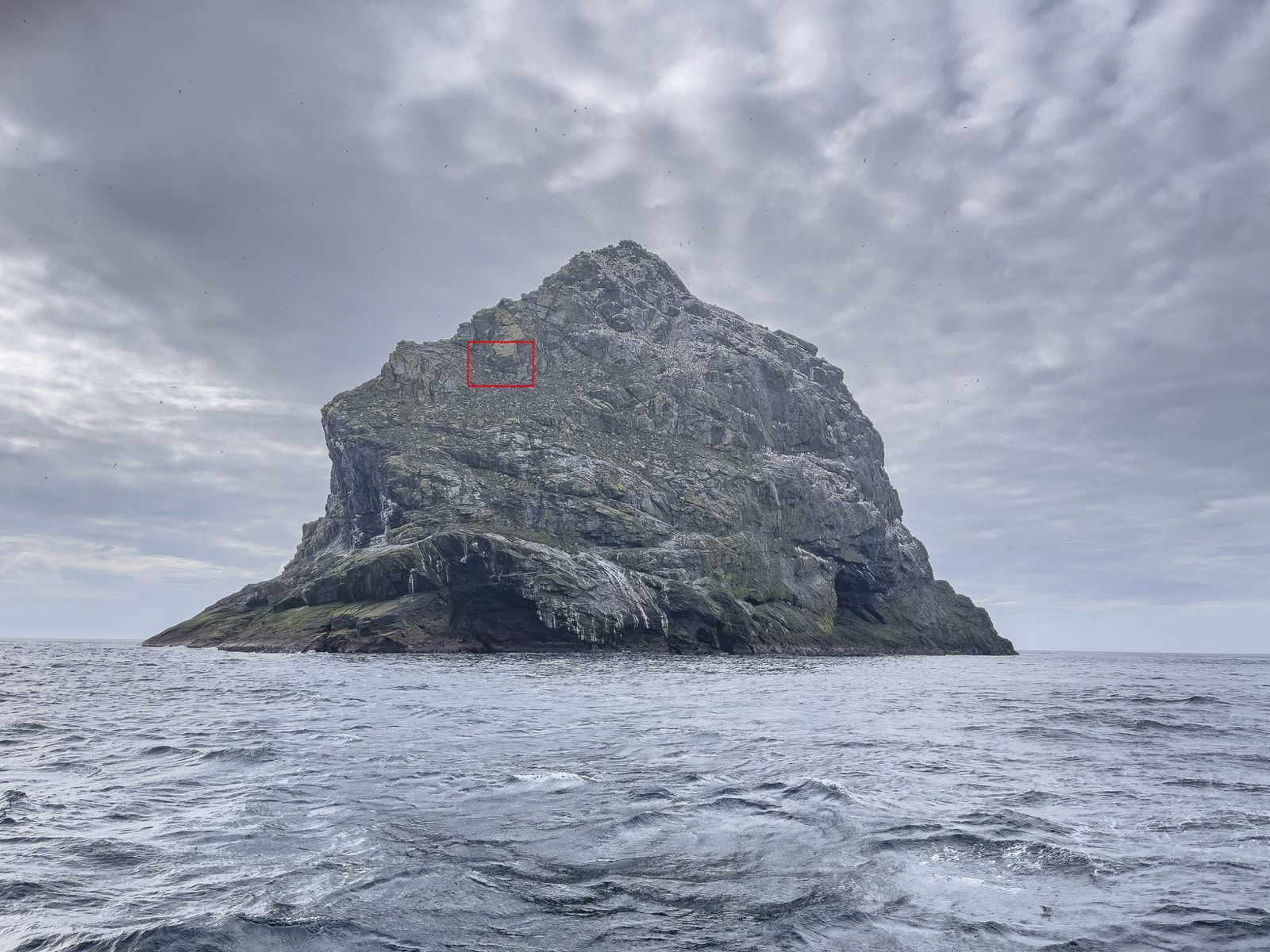
From there, it was a 2.5 hour trip, in rougher conditions than the journey out, back to Leverburgh. A wonderful day out that will live long in the memory.